Stop Wasting Time and Money on Pro Gear: Why Fast Equipment is Ruining Your Table Tennis Technique
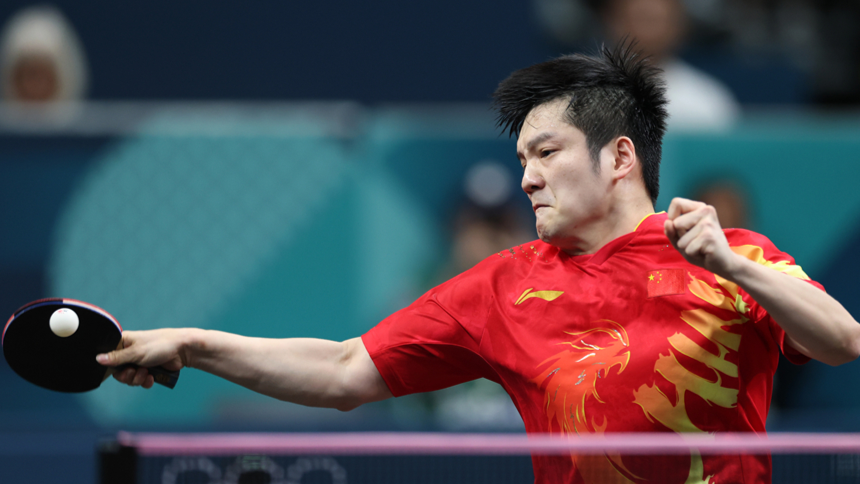
The 'Hit-Through' or 'Hit-Brush' Secret: Why Pro Gear is Sabotaging Your Table Tennis Growth
Are you stuck in the "beginner-intermediate table tennis level"? Do you feel like you need an expensive faster carbon racket with top notch rubbers to generate the power you see on TV?
If you are an amateur player thinking of buying a Butterfly Viscaria with Zyre 03 and Dignics 09c rubbers OR a DHS Hurricane Long 5 with National Hurricane Blue Sponge — stop the purchase for a second and read further. You will save yourself time, money and effort.
I spend a lot of time at club competitions, amateur tournaments, and training sessions. I've also been training at centers like Borussia Düsseldorf. Over the years, I have noticed a specific, terrible pattern among amateur players that I believe is leading to people stopping playing the sport around the world.
The pattern is: "I need more speed and power and since my technique is all fine, I'm going to buy myself what [insert pro player name here] uses. That will solve it."
So then they go and spend hundreds of dollars on a Butterfly Viscaria, a DHS Hurricane Long 5, or a Super ZLC. They pair these stiff, carbon blades with the fastest rubbers money can buy — Zyre 03, Dignics 09C, Hurricane National, K3, you name it. Many truly believe this will help them improve.
And then, they lose, and keep losing. They have no feeling, every practice feels like a "bad day," and frustration mounts until they eventually resell that expensive gear or quit the sport entirely. I find it very sad because I love Table Tennis and I want more people to play it, not less!
It is a tragic cycle where passionate players get lost chasing a magic solution that doesn't exist. So if this sounds like you, please stop. You are looking for speed in the catalog, but you need to find speed in your body biomechanics.
The "Fast Food" Trap
I know we live in a world of instant gratification. We want results, and we want them now. In table tennis, this manifests as the quest for the fastest blade.
But buying a carbon blade is the "Fast Food" solution to table tennis. It gives you an immediate rush of speed. It feels effortless for the first five minutes. But what your game actually needs is "Broccoli" — the nutrition of proper technique.
There are no shortcuts. If you feed your game "fast food" equipment before you have the solid mechanics to digest it, you will stunt your growth permanently.
So I'm going to explain what the secret of Table Tennis power is. This is what differentiates intermediate from advanced players, and it's also why good players can hit really hard and still have more control — it's the paradox of table tennis!
The Two Types of Table Tennis Strokes: "Brush" vs. "Hit-Brush"
To understand why your racket is too fast, you need to distinguish between the two fundamental types of contact in table tennis:
❌ The Bad Way: The "Brush-only" Stroke
Most intermediate players are stuck here. You rely entirely on the friction of the topsheet. You graze the ball thinly to generate spin.
The Feeling:
The Symptom:
The Mindset:
✅ The Good Way: The "Hit-Brush" Stroke
This is where the magic happens. You are able to hit through the sponge and blade, and produce a very satisfying loud sound when you hit the ball. And yet still, it goes on the table with immense speed and spin.
The Technique:
The Feeling:
The Result:
🎬 Watch These 3 Videos to Understand the Feeling
In order to truly understand this feeling, please watch these videos before continuing:
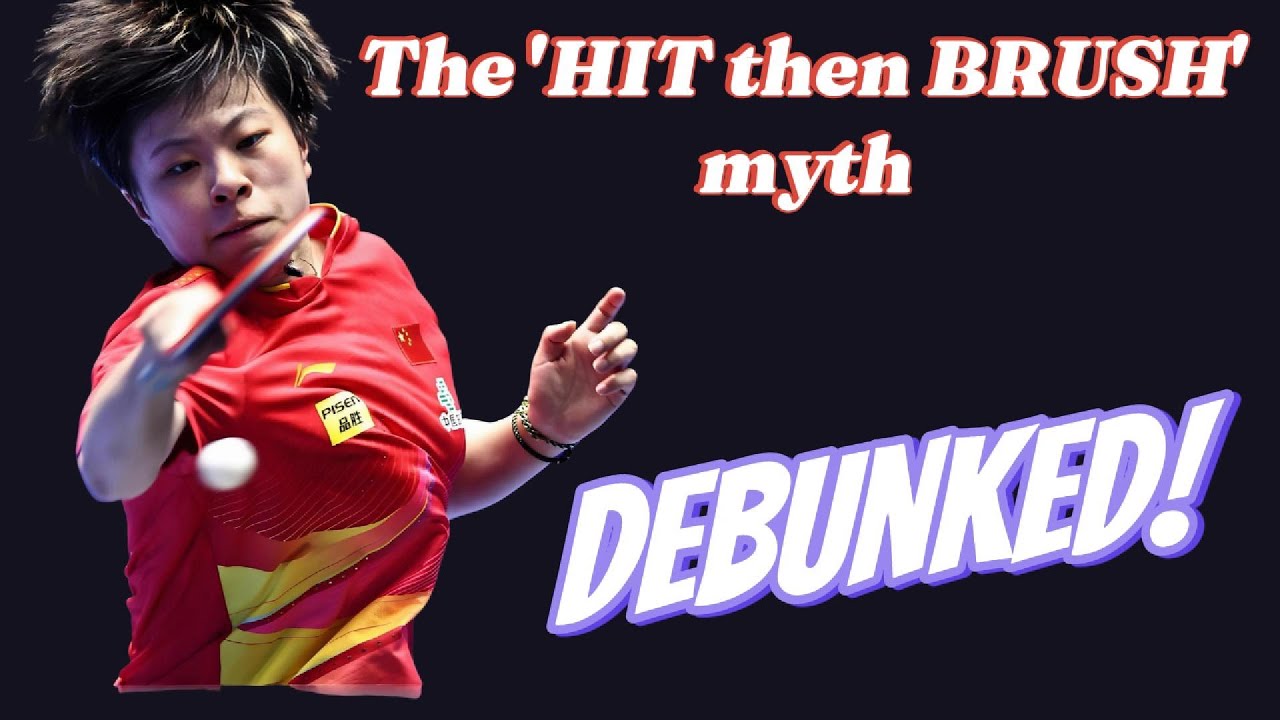
Understanding the Hit-Brush Technique
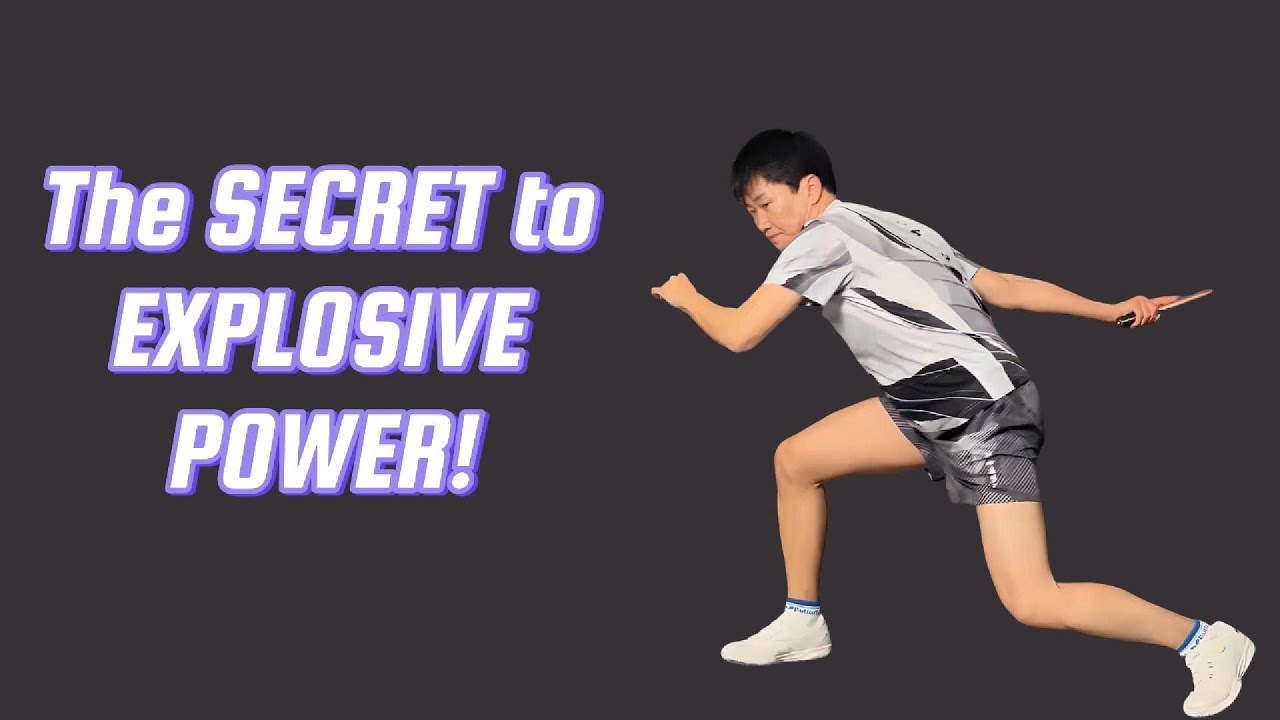
Sponge Compression Explained
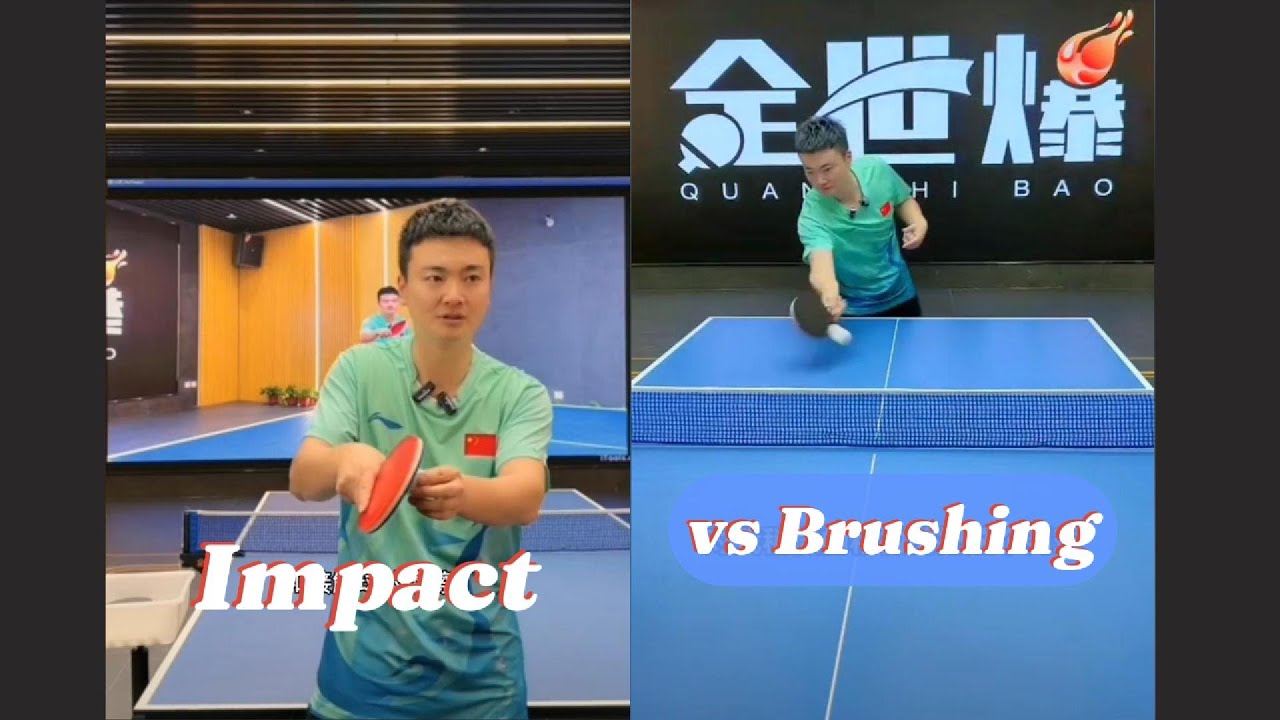
The Sound of Proper Contact
The Biomechanics of the "Hit-Brush": How to Execute It
To transition from a "brusher" to a "hit-brusher," you must stop playing with just your arm and start playing with your entire kinetic chain. It requires a specific sequence of movements:
1. Recoil and Body Tension
You cannot generate compression power from a static stance. You must use "recoil." This involves:
2. The Relaxed Arm (The Whip)
This is where most amateurs fail. They tense their biceps and shoulders to hit hard. But tension destroys speed.
3. Fingers and Open Wrist (The Snap)
As your body uncoils, your arm is dragged forward. To maximize acceleration:
The Physics: Why Fast Gear "Brakes" Your Growth
So now that you understand the above, let's get back to our initial point: If you are currently in the "Brush Phase," fast equipment guarantees you will stay there.
Here is the vicious cycle of what's going to happen if you keep on using a Viscaria or Long 5 before you are ready:
The Vicious Cycle:
1. Zero Dwell Time
2. The "Braking" Mechanism
3. The Compensation
4. The Consequence
5. The Result
I hope you can now see that in order to get speed, spin and control in table tennis you need to learn to hit through the rubber and blade. To teach your body that, you need dwell time — a blade and rubbers that hold the ball for a fraction of a second longer, allowing you to feel the sponge compress and your body transfer energy into the shot.
Conclusion: Save Your Money, Fix Your Game
Are you still just "brushing"? Do you struggle to finish points with power?
Put down the Viscaria. Step away from the Innerforce ZLC or Hurricane Long 5.
These blades are designed for players with perfect mechanics who are always in the right position. They can hit through the ball with 100% power and still need the blade to provide extra speed. You are not there yet.
If You Want to Reach the Next Level:
If you continue to be an Equipment Junkie (EJ) without fixing your stroke, you aren't just stalling your progress — you are going backwards and wasting precious money and time.
Save yourself all that frustration and go back to enjoying table tennis!
And if you need any help in the process, send me a message — I'm happy to talk!
Bonus: The Secret of Hurricane 3 and Chinese Technique
Why do so many coaches recommend DHS Hurricane 3 (H3) for developing players?
H3 is tacky and hard. If you just touch the ball, it goes nowhere. It is "dead." This forces you to hit through it.
The rubber teaches you the technique. It demands that you use your legs, waist, and full arm acceleration to activate the sponge.
Now you understand why so many people say that Hurricane rubbers are strict but fair teachers. I will do another blogpost on this soon, including the topic of boosting as well.
Need personalized equipment advice?
I can help you find the perfect blade and rubber setup for your playing style.