The First Step to Mastery: A Comprehensive Guide to Choosing Your First Custom Table Tennis Blade
So, you've joined a table tennis club. You've moved past the phase of playing "ping pong" in the garage or the breakroom, and you are ready to learn the sport of table tennis. Welcome! It is a sport of infinite complexity, speed, and spin.
One of the first hurdles every new club player faces is the equipment. You look around and see players with custom-made bats, carrying specialized cases, gluing specialized rubber sheets onto wooden frames. It can be intimidating.
The temptation is to simply buy a pre-assembled racket from a sports store or an online retailer. Or, conversely, to buy the most expensive, fastest equipment that the Olympic champions are using.
Both of these are mistakes.
This guide will explain exactly why you need a custom setup, the science behind the wood you should choose, and how the wrong equipment can permanently damage your technique before you've even started.
Part 1: Why You Must Ditch the Pre-Assembled Bat
If you are serious about learning proper strokes, the pre-assembled bat (the kind that comes wrapped in plastic with the rubbers already permanently attached) is a dead end.
The Problem with the Wood
The soul of a table tennis racket is the blade (the wooden frame). In pre-assembled bats, this frame is mass-produced using low-quality plywood. The layers are often uneven, and the wood is "dead."
In table tennis, "feeling" is everything. When the ball hits the racket, vibrations travel down the handle into your hand. These vibrations tell your brain where the ball hit, how hard it hit, and the angle of the impact. A cheap, pre-assembled blade dampens these vibrations. It feels like hitting the ball with a piece of cardboard. Without this feedback, your brain cannot learn to micro-adjust, which is the foundation of technique.
The Rubber and Biomechanics
Furthermore, the rubbers on pre-assembled bats are generally low durability. They lose their grip (tackiness) within a few weeks, turning into anti-spin sheets that make it impossible to learn how to generate topspin. Worse, once they die, you cannot easily peel them off to replace them. You have to throw the whole bat away.
But the biggest issue is symmetry.
Pre-assembled bats come with the exact same rubber on both sides. This ignores a fundamental reality of human physiology: Your forehand and backhand are biomechanically different.
The Forehand: Involves the rotation of the trunk, the waist, and a longer arm swing. You can generate significant power and speed through body mechanics alone.
The Backhand: Is physically restricted by the chest. The stroke is naturally shorter, often relying more on the wrist and forearm snap (especially in modern table tennis).
Because the mechanics are different, your setup needs to be different. A custom setup allows you to put a slightly harder rubber on the forehand (for power) and a slightly softer rubber on the backhand (for control and ease of lifting backspin). A pre-assembled bat denies you this customization.
Part 2: The Holy Grail of Beginner Blades: Limba and Ayous
If you ask an equipment junkie what the best wood for a beginner is, they might give you a vague answer. But if you look at the science and history of the sport, the answer is specific: A 5-ply All-Round blade made of Limba and Ayous.
This combination is not just for beginners; it is the foundation upon which champions are built.
The Chemistry of the Combo
Limba (Outer Ply): Limba is a classic African wood used on the outer surface of the blade. It is soft enough to provide excellent "dwell time" (the amount of time the ball stays on the racket), but it provides a very clear, honest vibration. It allows you to "hold" the ball to generate spin.
Ayous (Core): Ayous is lightweight and flexible. When used as a core, it acts as a shock absorber that gives the blade control, yet it has enough spring to return energy to the ball.
This specific composition is a proven winning formula. If you look at the blades used by Olympic athletes and World Champions—such as the DHS Hurricane Long 5 (Ma Long) or the Butterfly Viscaria (Fan Zhendong)—you will find this DNA.
The Viscaria, for example, uses a Koto outer ply (which we will discuss later) and adds carbon layers, but the core principles of using quality wood to balance flexibility and stiffness remain. The Long 5 uses Limba outer plies, just like your beginner blade, but hides Carbon layers deep inside to activate only on very hard swings.
As a beginner, you want this wood composition without the carbon. You need the pure wood feeling to develop your "touch."
Part 3: Avoiding the "Exotic" Woods
When shopping, you will see other wood types advertised as "premium" or "fast." While these are excellent woods for specific styles, they are detrimental to a beginner.
Koto: The Crisp Attacker
Koto is often used as an alternative to Limba (as seen in the Viscaria). It is harder and stiffer. This makes the blade "crispier" and more direct.
The Problem: The ball rebounds off Koto very quickly. It has less dwell time. For a beginner trying to learn how to "loop" (brush) the ball, Koto is difficult because the ball leaves the paddle before you can impart heavy spin. It requires precise timing that you don't have yet.
Hinoki: The Japanese Luxury
Hinoki (Japanese Cypress) is a legendary wood. It smells like lemon and is incredibly expensive. It is unique because it is very soft but has a massive "catapult" effect.
The Problem: Hinoki is bouncy. It is fantastic for advanced players who want speed with a soft feel, but for a beginner, the "gears" are hard to manage. In the short game (pushing, touching), the ball might pop up high because of the wood's natural springiness. It requires advanced hands to tame.
Spruce
Spruce is often used as a secondary layer in blades. It shares similar properties with Hinoki—it is springy and lively. Like Hinoki, it usually results in a blade that is too fast and bouncy for a developing player.
Walnut
Walnut is a significantly harder wood often found in 5-ply offensive blades (like the Yasaka Ma Lin Extra Offensive). It produces a higher pitch sound on contact and offers a very solid block.
The Problem: Because it is hard, it doesn't "flex" easily. While great for blocking and flat hitting, it makes it difficult for a beginner to "feel" the ball sinking into the blade. This lack of feedback makes learning the subtle art of brushing the ball for topspin much harder.
Balsa
Balsa is famous for being incredibly lightweight and is often used by players who have wrist issues or prefer a very light setup. However, Balsa has a unique, "non-linear" property known as the "balsa effect."
The Problem: On soft touches, Balsa absorbs energy and is very slow. On hard hits, it suddenly engages and catapults the ball out at high speed. This unpredictability makes it a nightmare for developing a consistent stroke, as the same physical effort can result in two vastly different ball speeds depending on impact force.
Ebony and Rosewood
These are dense, premium hardwoods that look beautiful (often dark or reddish) and are used in high-end blades like the Stiga Ebenholz or Rosewood series.
The Problem: These woods are extremely hard and stiff. They are designed for elite players who hit with massive force and need the blade to not bend. For a beginner, they feel like playing with a piece of brick—slick and unforgiving. The ball slides off too quickly to generate spin unless your technique is perfect.
The Verdict: Stick to the neutral, honest feeling of Limba and Ayous.
Part 4: The "Speed Trap" – How Fast Gear Ruins Technique
This is the most critical concept to understand. New players often think, "I want to hit the ball fast, so I should buy a fast blade (OFF or OFF+)."
This is how you ruin your long-term potential.
When you use a blade that is too fast (or rubbers that are too bouncy):
Because the equipment is doing the work, you don't learn to generate your own power. You lose the feeling of the ball sinking into the wood. Years later, when you try to advance to a higher level, you will find you cannot loop against backspin because your stroke is too short and jerky.
A slower (All-Round) blade forces you to use proper technique. To get the ball over the net with speed, you must use your legs, waist, and a full arm acceleration. This forces you to learn the correct biomechanics.
Part 5: The Golden Standards
So, what should you buy? You need a classic, 5-ply, All-Round (ALL) blade made of Limba and Ayous.
Here are the undisputed kings of beginner blades that will suit almost all budgets:
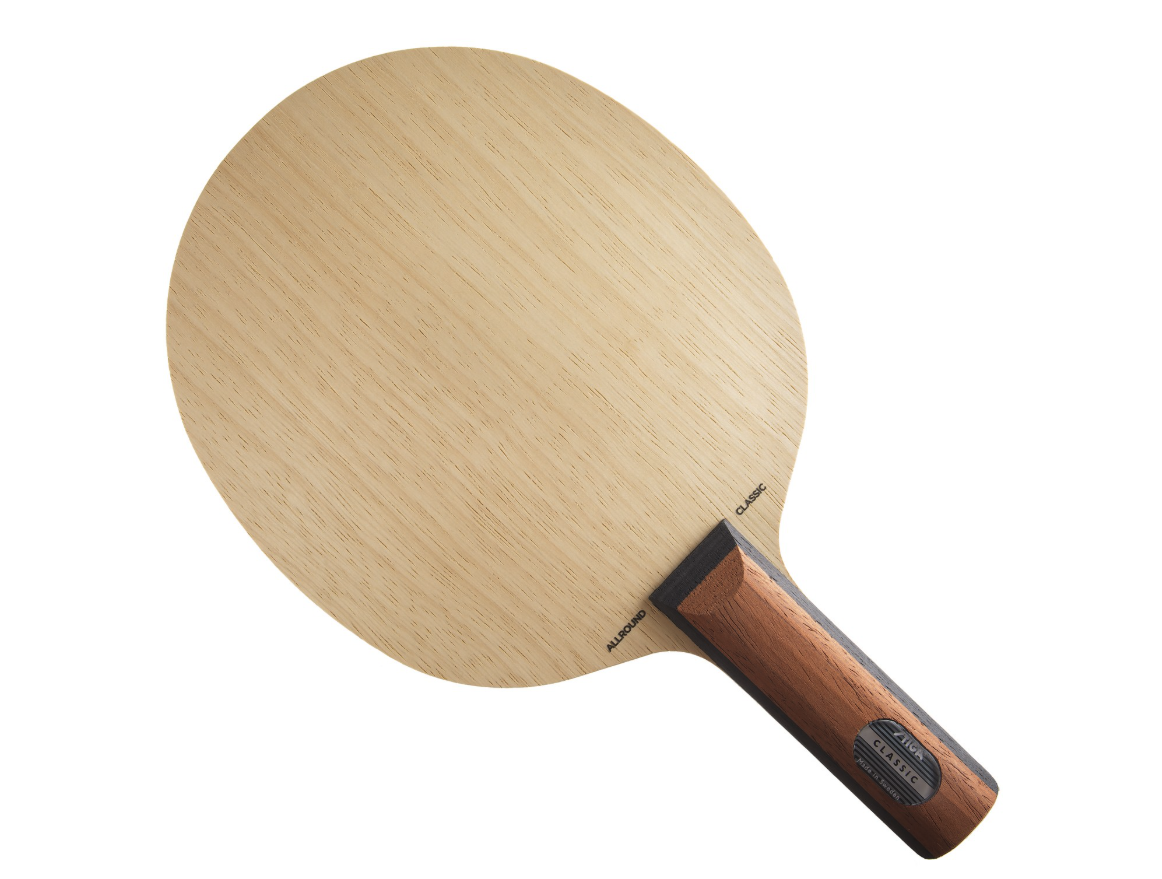
1. The Stiga Allround Classic
This is the benchmark. It was first released in 1967 and millions of players, including world champions, started with this blade. It offers the perfect balance of control and feeling. It is virtually impossible to not feel the ball with this blade. It allows you to make mistakes and understand why you made them. This was my personal favourite blade for 3 years and I have recommended it to many players, it always works.
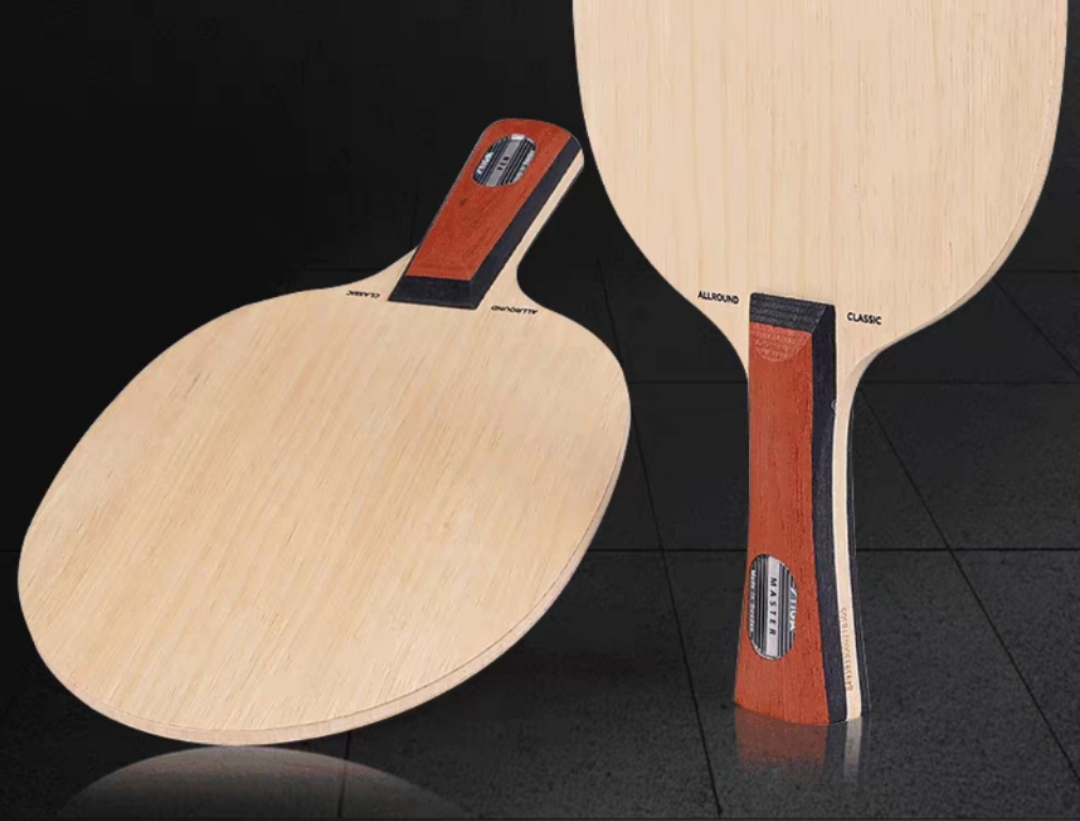
Stiga
Allround Classic
2. The Yasaka Sweden Classic
Produced in the famous wood factory in Tranås, Sweden. It is very similar to the Stiga but perhaps slightly softer with even more vibration feedback, some people have also told me they feel is a slightly bit faster than the Stiga. It is a great blade for beginners and it has a very comfortable handle (personally tested!). If your budget is a bit more limited, choose this blade.
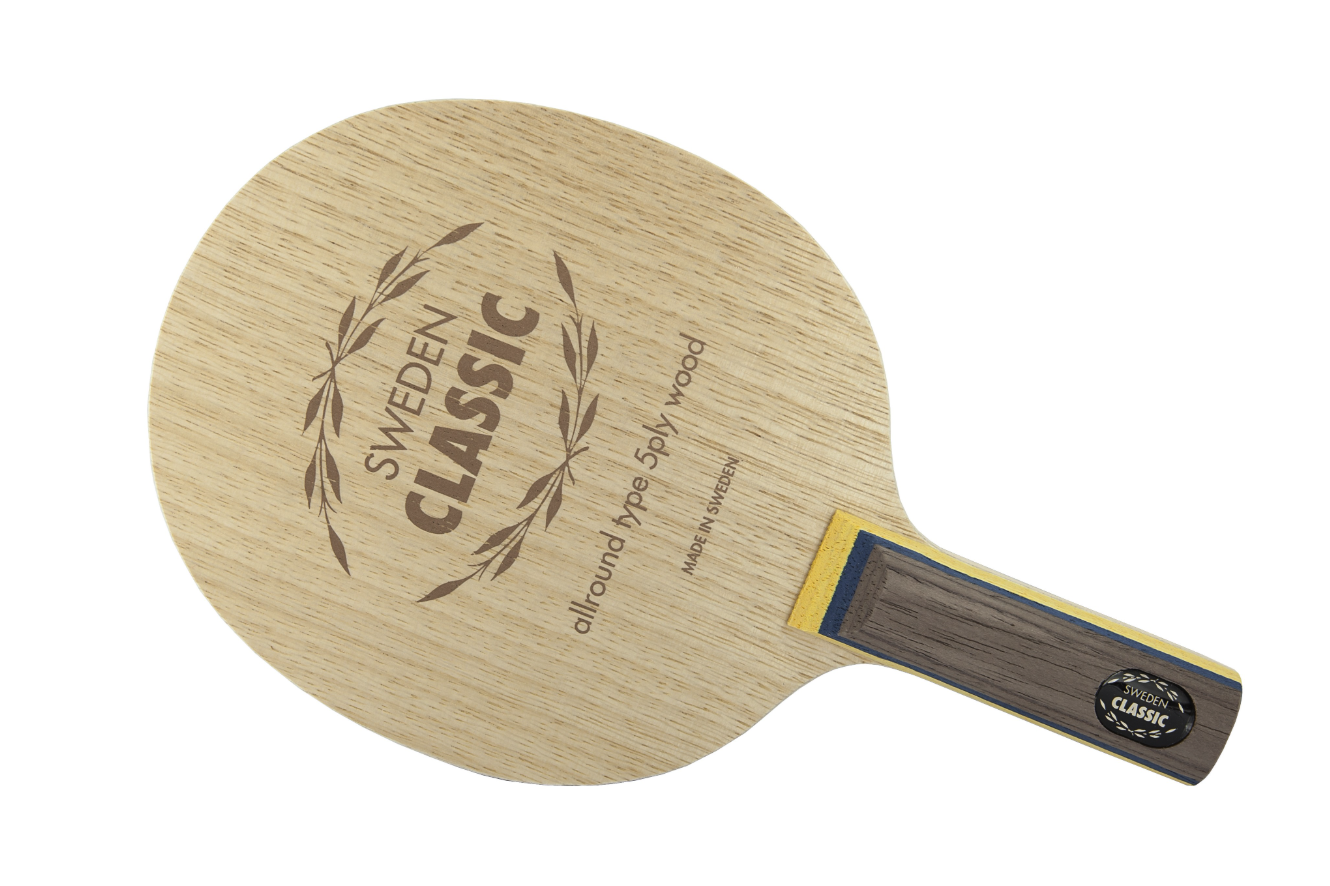
Yasaka
Sweden Classic
3. The Xiom Novus Allround
Xiom launched the new Novus Allround a while ago and it has been a pleasant surprise in the 5 ply all-wood ALL category with a limba top. Some of our club players play with this blade and I have tested it a couple times, great feeling but a bit different than other blades in this article. It's not too fast and has plenty of control, a great alternative to the Swedish classics.
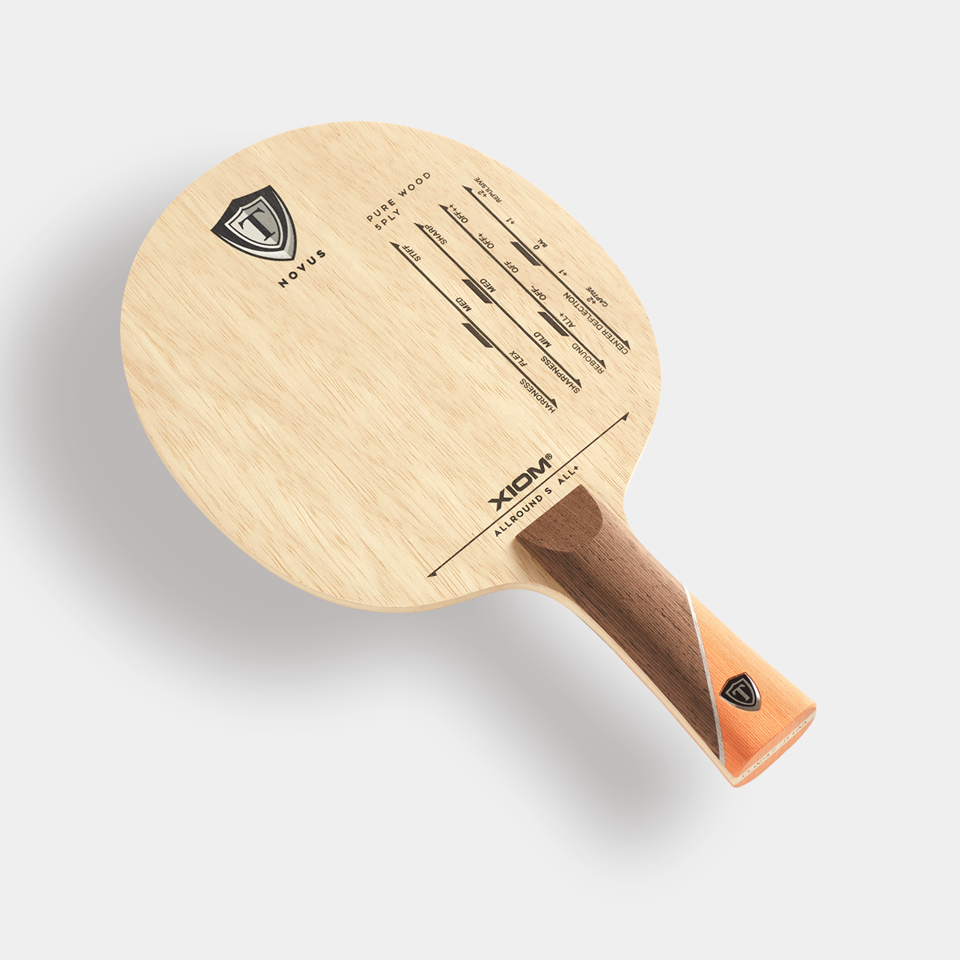
Xiom
Novus Allround
4. The Butterfly Timo Boll ALL
This is Butterfly's take on the classic all-round blade, named after the legendary German player Timo Boll. It offers exceptional control with a slightly higher speed ceiling than the Swedish classics above. The 5-ply Limba/Ayous composition provides that wood-feeling feedback and you get the premium feel of a Butterfly blade. Many of our club players have this blade and it feels very good, definitely a great choice too.
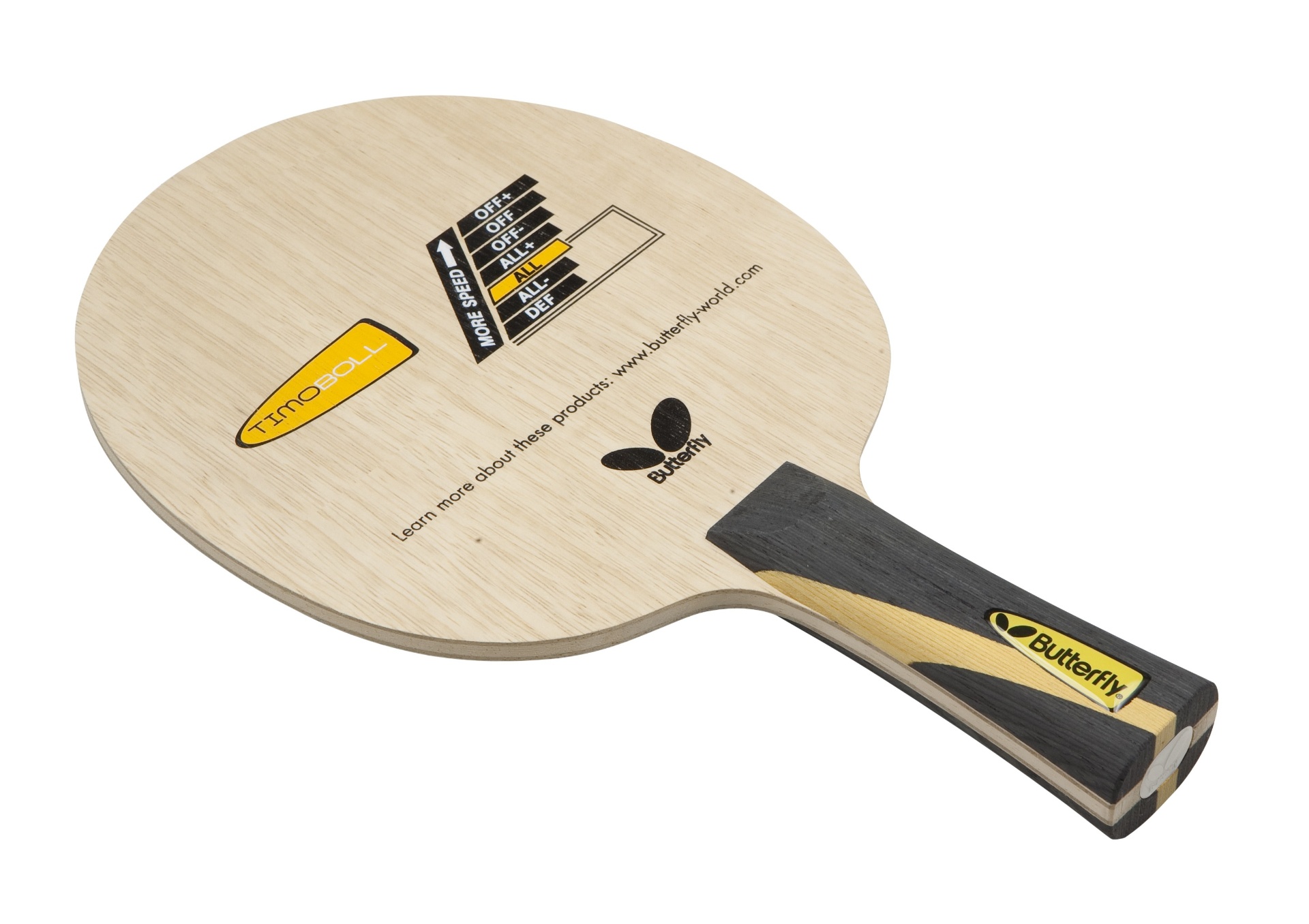
Butterfly
Timo Boll ALL
5. The Donic Appelgren Allplay
Named after the Swedish legend Mikael Appelgren, known for his incredible touch. This blade is famous for its thin handle and incredible control. I personally own the more offensive version of this blade and I can say it is super comfortable to hold and has a really good feeling. I would still recommend to buy the Stiga/Yakasa blades first, but if you like Appelgren's style, or you want a bit more speed or you are just a Donic fan, this is a great option too.
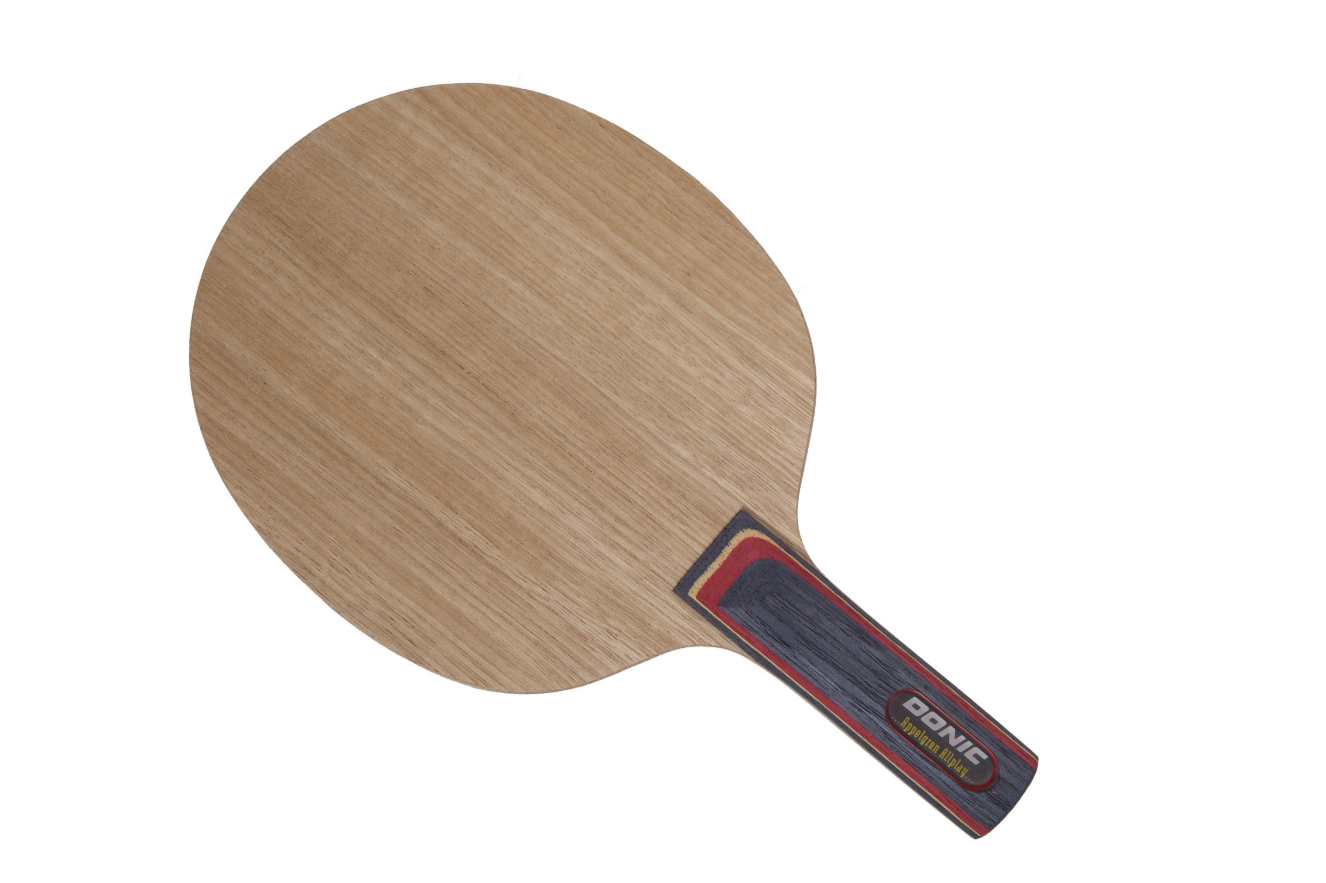
Donic
Appelgren Allplay
6. The Andro Inizio Green ALL
The last entry of this list, the Andro Inizio green is our club's standard pre-made racket and most of our new recreational players start with it with 729 rubbers as a budget option for the first custom setup. I prefer the feeling of some of the other blades above, but if you can get it for a small amount of money, this is certainly a great value option!
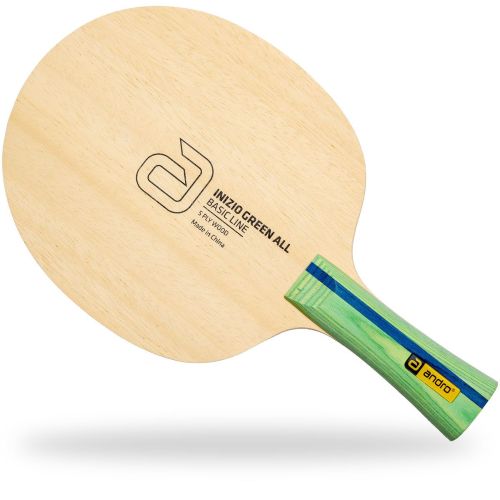
Andro
Inizio Green ALL
Other great alternatives from the community
Each brand usually has their own beginner (ALL-/ALL) blade in this category and I have not tried them all, but that doesn't mean that they are not good or even better than the ones above. Here's is a list of other blades that are also recommended by community members and friends that you can try:
Summary
When you walk into the club with any of the blades mentioned above, with you own custom forehand and backhand rubbers (check my other article for more information on this) you are making a statement.
You are saying that you are not looking for a shortcut. You are building a foundation. You are choosing a blade that will act as a strict but fair teacher, forcing you to develop the full, sweeping strokes that define the beauty of table tennis.
Trust the wood, respect the process and see you at the table!
Need personalized equipment advice?
I can help you find the perfect blade and rubber setup for your playing style.