DHS Hurricane 3 Neo: The Complete Amateur Guide
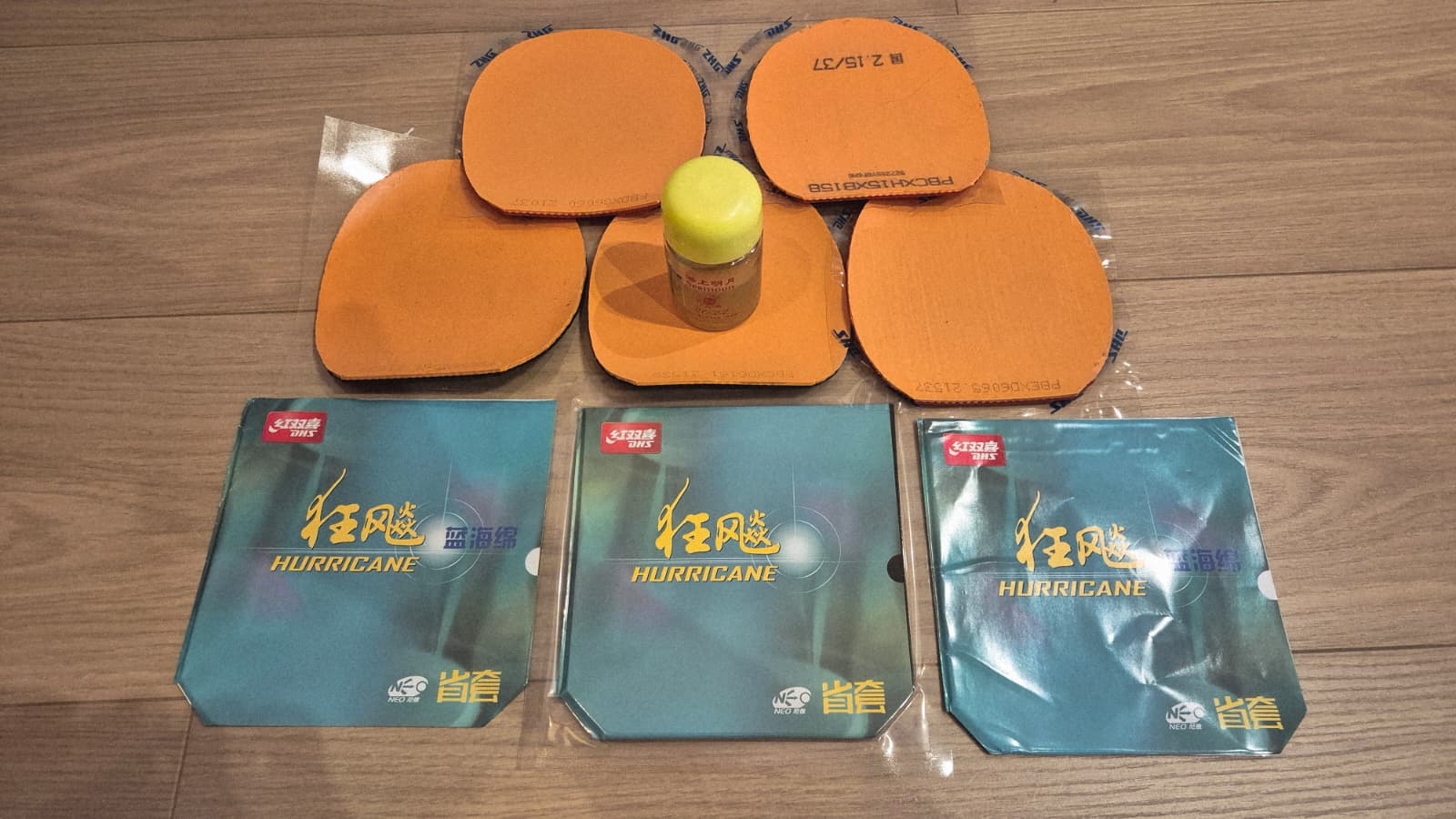
Everything you need to know about the H3 Neo — versions, hardness, sponge colors, boosting, and whether it's right for you
Introduction
I have used DHS Hurricane 3 Neo on my forehand for 7+ years, and on my backhand for around 3+ years. I've tried every sponge hardness (except the pro versions like 41.5° or 42°), and I've played with it both boosted (1, 2 and 3 layers) and unboosted. And I can surely say that after these years of experimentation and trying other things in between, there is no rubber I love more. It is, without a doubt, my favorite forehand rubber of all time, and it gets a solid top 5 for the backhand.
What's curious is that even though this is one of the most popular rubbers in the world, there are not too many guides out there that explain all the complicated details and myths of this rubber in a simple way that most people can understand. So if you are an average club player wondering if the H3N should be your next FH or BH rubber, this guide is for you.
Why the H3N is my favourite FH rubber of all time
Let me get started with how a well boosted Hurricane 3 Neo feels like when you use it with the correct technique, because most people have never experienced this when they have used it so there are many misunderstandings and myths here (i.e. it's dead, feels like a brick and it's unplayable), for many reasons I will describe below:
Bonus point: Sometimes, certain situations don't allow for you to engage the sponge but that's fine. If you just engage the topsheet, you can do some devilish brushes that will make the life of the opponent a bit miserable from time to time when they don't see it coming. This is one of the reasons why many people say that the rubber produces somewhat unexpected shots. Now, if this does not convince you that when used well, there is nothing better, then I don't know what will! :)
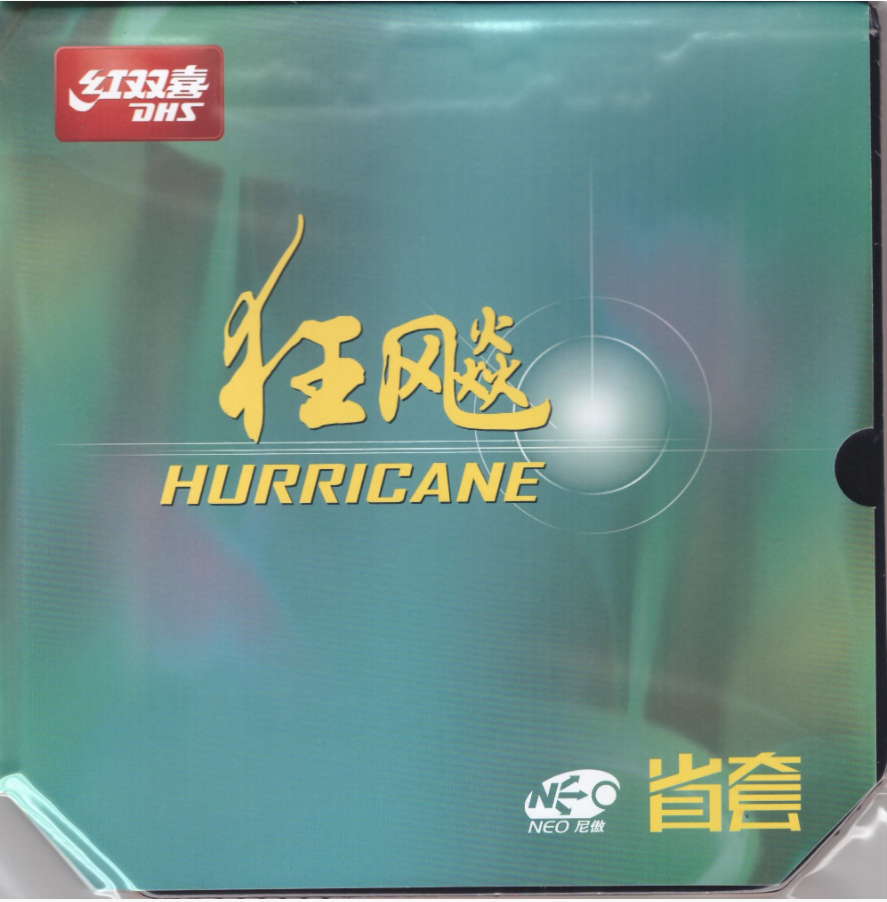
DHS
Hurricane Neo 3 Provincial (Orange)
However, this rubber might not be for you
All that I mentioned above is immediately the problem with this rubber as well. You need to do things right and when footwork and technique are correct it is very rewarding, but when you do things wrong, it will have no mercy on you, it's a very strict (yet fair) teacher. This is why many people say that it is not for everyone, and they are right. Because the sponge is so hard, it demands a specific physical commitment and proper boosting. You cannot just wave your arm at the ball. You cannot just brush it a bit and expect a lot of catapult, and you cannot do the technique wrong. To unlock the power of H3 Neo on the forehand, you need:
I often describe the loading action to people as a Dragon Ball "Kamehameha": you need that deep recoil action to gather energy. From there, the stroke is like drawing a half-moon with your finger, snapping the wrist open right before contact.
When boosted and hit with the correct stroke, the speed and spin are unmatched. Even against high-level club players or national-level opponents, provided that I execute this loop correctly, they very often cannot bring the ball back, even though I don't use a carbon blade (a DHS PG7 with the right technique is more than enough). That is the raw power of this rubber.
You can also use it on your backhand but you probably shouldn't
I would not choose H3 Neo for the backhand unless you are ready to boost a fair amount, use the 37 or 38 version and have a very solid technique. Otherwise, stick to its much better and easier to use hybrid relative, the Hurricane 8-80, which is my current backhand rubber together with Dignics 09c. The other alternative is if you enjoy having a die-hard learning experience, then yes, choose it and follow the path I followed (I was wrong), but I warn you, you are in for a very tough ride. Please then only do 37 degrees first to save you from some of the misery.
This is because, just like the forehand, H3 Neo on the backhand requires you to use your body a lot and the game has become so fast that in most shots you won't have the time for it. Besides, many players prefer a "punch and block" style on the backhand, or a quick wrist flick, or a controlled loop. H3 Neo is not for that; it is for active high risk high reward looping.
I used the softer version (37°) on my backhand for some years. It was decent and I learnt a lot with it, but eventually, I switched to the DHS Hurricane 8-80. The 8-80 has more catapult, is softer, and more forgiving. I was getting really tired in the rallies, didn't get as much spin as I wanted and my technique was not compact enough for the speed of the current game. After I changed, I now have a much better BH with better spin/speed and I still get to keep my tacky feeling after all. I have used tensors before but I serve/receive/counterloop often with my BH and there is too much catapult and too few tack for my taste. I'm definitely not the majority here, most people prefer a tensor rubber on their backhand and I can agree to that, so nothing wrong with that! If you like tensors, stick to that, it's often the right approach.
So to summarise, don't use the H3N on your backhand unless you are prepared to commit to the tradeoffs that it brings. And just a last thought on this, even the great Wang Chuqin used hurricane 8 before as a way to get more BH power. Now he is back to the H3N but I'm sure he is boosting that with at least 4 layers and changing rubbers very very often, plus hey, he is the number 1 in the world, so I guess he can do whatever he wants ;)
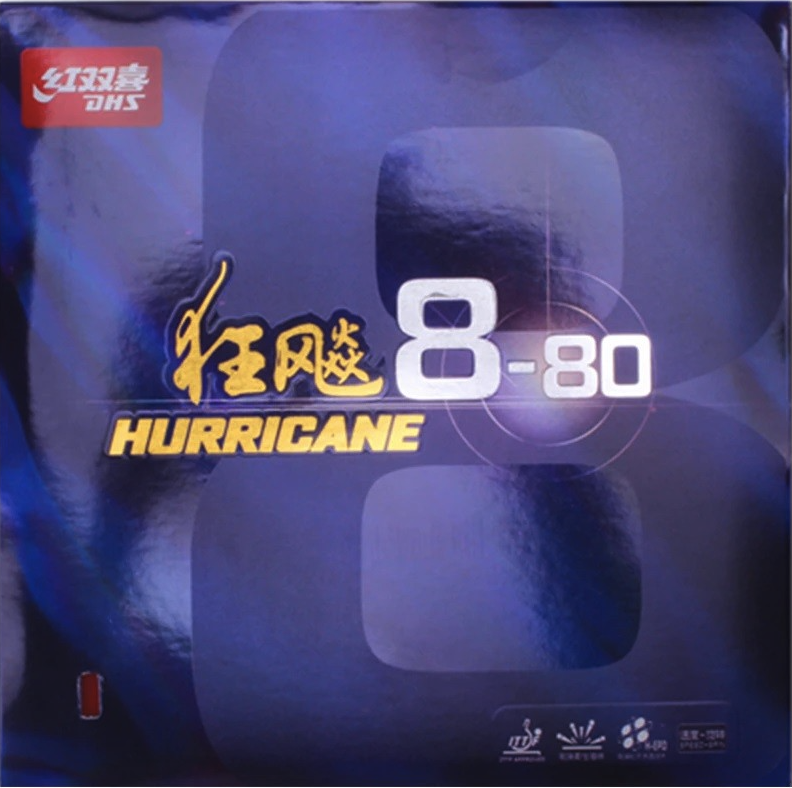
DHS
Hurricane 8-80
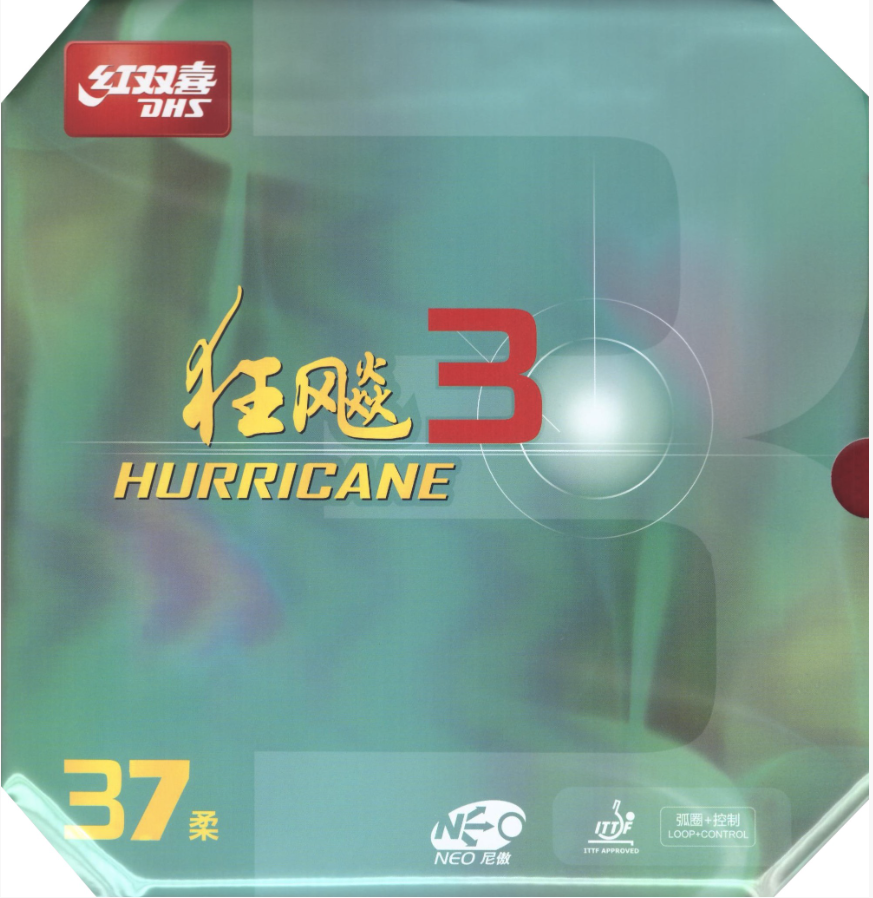
DHS
Hurricane Neo 3 (37°)
Side note: I'm sure by now, you are itching to know more about boosting, but let's first discuss other important topics before we talk about that. You can always scroll all the way down if you really can't wait, but promise me you will read the rest of the text as well!
Okay Victor you convinced me to try it. What version do I buy: Commercial, Provincial or National?
This is where many players start getting confused and wasting money. Let me simplify the differences so you don't fall into the same trap!
Commercial Version: It's a gamble
Nowadays, the quality control on the commercial version is really poor, it was not like this before but for a couple years now, you are essentially gambling on tackiness and sponge hardness every time you buy a commercial H3N. Very often (check this community or Table Tennis Daily forums if you don't believe me), they have zero tackiness right out of the package, so then I wonder what's the point? Sponge hardness and thickness also vary wildly between sheets, so each time you have to get used to something else. Don't get me wrong, it still is a good rubber for beginners and people trying it for the first time, but for real usage and getting the rewards I mentioned in the beginning of this blog, the provincial version is a must.
As an alternative if you are on a budget, buy alternatives from 729, Sanwei, Loki or Yinhe. They offer much more tackiness for the same price and you often don't need to boost.
Provincial Version: Buy this
This is what I recommend for all amateurs. It has a very good price on Ali Express (use Beo Store for quality), ProTT, DHS-729 and TableTennis11, the sponge is consistent, and the topsheet is super tacky. This is what my contact in China uses (he plays provincially, 41 degrees blue sponge), and it is enough for all of us.
It is essentially the perfect balance between money and value and most people on the Table Tennis Daily forum agree to this.
National/Pro Version: Not worth it
The National version is essentially the same but with slightly more speed, spin and better QA. However, unless you are a very high-level player, you will not notice a significant difference. I certainly haven't, so to me, it is not worth the extra 50-100 euros. Also, there are way too many fakes out there in the market, so only buy it from the official sources like Table Tennis 11, ProTT, DHS-729 or the best shops in Ali Express (i.e Beo Store) for example, and avoid the rest. But honestly, you will not notice the difference, so why spend so much more money on it? Imagine that blue sponge gets a bubble after boosting because you overdid it, that sucks for the extra money you just paid.
Sure, I'll get the provincial, but which hardness do I go for?
Well, first of all, DHS measures hardness differently than European brands. So do not get confused by the low numbers, these are very hard sponges that are not comparable to your usual 40-42 degrees tensor :)
So read on and follow my advice to avoid buying a brick that you will hate the moment you play with it:
39°: Where every H3N beginner must start
If you are buying your first sheet of H3 Neo, buy 39°. Please follow my advice here, do not start with anything harder than 39, especially if you are not planning on boosting. This is a mistake I see so often.
Why? Because it is the standard hardness for a reason. It offers everything you need and it's not too hard to activate it. Sure, it's not the most powerful, but for all of us amateurs, this is often enough.
Many amateurs think "harder is better, it has more power" and buy 40° or 41° immediately. They end up with a rubber they cannot penetrate, and their shots lack quality and spin because the sponge acts like a wall. Trust me here, I have tried them all, I play at the second highest regional level and practice often with our national players. 39 is enough, especially blue, for 90% of us all, 40 is already a lot and only do this if you have used 39 a lot. Avoid 41 or harder.
40°: The Power Upgrade for advanced users
As mentioned above, only upgrade to 40° if:
Sure, if you have all that, then the 40° gives you a heavier ball that kicks harder off the table. But remember, it is less forgiving. The moment you are lazy with your feet and late to the ball or if you are tired and do not engage the body correctly, you will miss more often than with 39°.
41° or harder: Use at your own risk, recommended for (semi) pros only
In my opinion, this is for national players or higher. Unless you train almost every day and have legs like tree trunks and technique like a beast, stay away. Unboosted, this feels like playing with a floor tile. Even with proper boosting (3-4 layers), it requires elite arm speed to activate.
My contact in China plays with 41 degrees, but he is a high level provincial player, I think this says enough.
The great debate: Blue vs. Orange Sponge
This is the most asked topic aside from boosting and where people have the biggest disagreements because at the end of the day it's somewhat subjective, even though DHS has tried to clarify the properties of both sponges objectively. I have tested both exhaustively so let me tell you 'my truth' on the topic:
Orange Sponge
Recommendation: If you are just getting started with Hurricane 3 Neo, buy the orange sponge. Do not buy the blue one yet, get used to the orange feeling first. (I made the mistake of starting with Blue — don't be me and save money, time and frustration).
Blue Sponge
Recommendation: If you are used to the H3N or have used many chinese rubbers before, go for the blue sponge and boost it with 1-2 layers according to your own taste (my chinese contact does 3-4 layers on his 41°, but that's because at his level he needs it). If you are new, stick to the orange in 39 degrees and progressively get used to it before changing to the blue version.
And finally, the topic of boosting!
This is perhaps one of the most controversial topics in modern table tennis, but if you want to understand the true potential of the H3N, we have to talk about it.
Is it Legal?
Technically? No. According to ITTF rule 2.4.7, any physical, chemical, or other treatment of the rubber after it leaves the factory is strictly prohibited. This includes boosters, tuners, and speed glues.
The Reality: In competitions, the ITTF uses "VOC-tests" to check for illegal solvents. However, modern oil-based boosters (like Haifu Seamoon) are VOC-free. They are undetectable unless you use so much that the sponge thickness surpasses the 4.0mm limit. It is an open secret that almost all top Chinese players boost. You can often tell because their rubbers look stretched, with the pimples "shining through" the topsheet. If this is the case, and it always is with Chinese pros, the rubber is heavily boosted.
What Does Boosting Actually Do?
Boosting chemically expands the sponge and increases its elasticity. It also stretches the topsheet, creating a "tensor-like" effect. After you boost, you will feel a noticeable increase in speed and spin and the sponge will feel softer, so spin generation becomes significantly easier because the ball sinks more into the sponge.
Should You Boost Neo?
Yes. DHS rubbers are fundamentally designed to be boosted. Unlike ESN rubbers that come tuned from the factory, DHS leaves the sponge unfinished so you can fine-tune it to your own taste. While the H3N comes "factory tuned," this is a very light effect that goes away after a couple training sessions, so to play at peak performance, H3 Neo requires boosting.
So what should you do?

Friendship/729
Battle II Provincial (Blue)
Sanwei
Target National (New)
How I boost: My personal preference
What booster?
I have always used Haifu Seamoon. I have never used anything else because it is the standard choice for all Chinese pros, but many users go for the Falco long term and are very happy with it. To know more about the different boosters, check this article out or this video if you like a more visual approach.
How many layers?
How to apply the booster?
(For a visual guide, search for "How to boost Hurricane 3" on YouTube — there are many great tutorials).
Final thoughts
This is all I have for you on the H3N! I hope you enjoyed reading the guide as much as I enjoyed writing it, and I hope that it will help you decide whether to use the H3N or not. If you end up using it, all I have to say is 'welcome to the club, and enjoy the magic'! Thanks for reading and be sure to check out my other equipment articles. Do let me know if you have any equipment related questions, I'm always happy to get in touch :)
Last note, I want to finish this by mentioning other great written reviews on the H3N. This guide is my own opinion on the topic and it is always healthy to check other people's opinions and experiences plus giving some kudos back to the community, so here are some links that I also enjoyed reading in the past:
See you at the table!
Need personalized equipment advice?
I can help you find the perfect blade and rubber setup for your playing style.