Beyond the Hype: My 5-Step Formula for Finding Your Perfect Table Tennis Gear
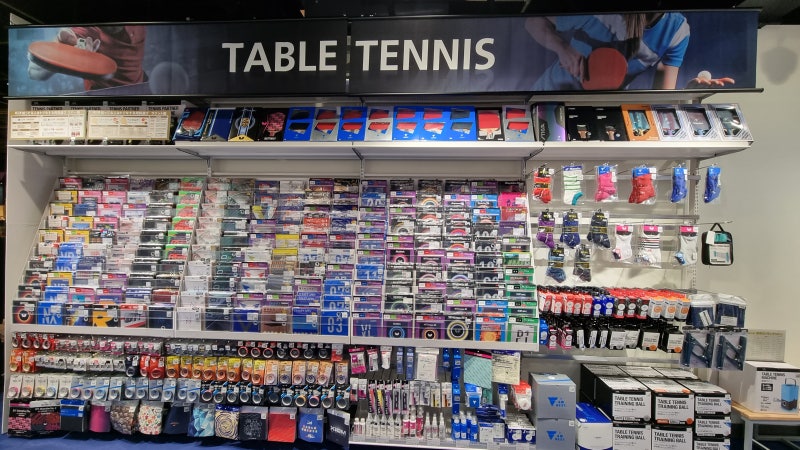
Walk into any table tennis forum or browse an equipment retailer, and you are immediately bombarded with marketing buzzwords. Catapult effect. Tensor technology. Inner-force carbon. Koto outer plies.
For many players, buying new equipment is a shot in the dark. They buy what the World Champion is using, or they buy what the fastest player in their club uses, only to find that the setup feels uncontrollable and actually hurts their game.
I believe equipment should be an extension of your arm, not an obstacle you have to fight.
To be clear, technique accounts for 80% of your performance, while materials are only 20%. However, that 20% is crucial because the right materials are necessary to learn the right technique. Brands and price tags don't matter; what matters is finding the correct equipment for where you are in your development right now, knowing that this will evolve as you improve.
Over the years, I have developed a rigorous, five-step methodology to help players navigate this chaos. It is not just about picking a "good" racket; it is about finding the right racket for your specific biomechanics, history, and goals.
Here is exactly how I work when I curate the perfect custom setup for you:
Step 1: The "Why" (Motivation Analysis)
Before we even look at a catalog, we need to understand the human element. Why are we here?
The motivation driving a change is the single most important factor in determining the budget and the direction of the advice.
The First-Timer: Are you a beginner transitioning from a pre-made racket to your first custom setup? If so, we need stability and control to help you learn proper strokes.
The Improver: Are you an experienced player hitting a plateau? Do you need more speed to finish points, or perhaps more spin to make your opening loops more dangerous?
The Compensator: Sometimes, players want gear to cover a weakness (e.g., struggling with serve reception).
Understanding the driver behind the change prevents us from falling into the "Shiny Object Syndrome"—buying new gear just because it looks cool.
Step 2: The Identity Gap (Current vs. Future Playstyle)
Once I know why you want to change, I need to know who you are as a player—and who you want to become.
I analyze your current playstyle. Are you a close-to-the-table blocker? A mid-distance looper? A chopper?
Crucially, I ask: Is this how you want to play in the future?
If a defensive player wants to transition into an aggressive forehand looper, buying another defensive blade would be a mistake. However, if that same player loves their defensive style and just wants slightly more reversal on their pips, the advice changes completely.
This step measures the "gap" between where you are and where you want to be, which dictates how extreme the equipment change needs to be.
Step 3: The Baseline (Material History)
Table tennis is a sport of extreme sensitivity. Your brain and muscles are calibrated to the vibrations and weight of your current equipment.
I take a deep dive into what you have been using until now. This gives me critical data points:
Wood Composition: What feeling are you used to? The sharpness of carbon? The soft dwell time of pure wood?
Rubber Hardness: Are you used to hard Chinese tackiness or soft European tensors?
The "Hate" List: What specifically do you dislike about your current gear? (e.g., "It feels hollow," "It throws the ball too high," "It's too heavy.")
If we ignore your history, we risk shocking your muscle memory, leading to months of frustration.
Step 4: The Deep Research (Blade Selection)
This is where the real work begins. If we determine a blade change is necessary, I don't just guess. I perform a forensic analysis.
First, I analyze the composition of your current blade using independent databases like TTGearLab, RevSpin, and various expert forums. I need to know the ply structure (e.g., 5-ply Limba/Ayous vs. 7-ply Koto/ALC).
Once I understand the DNA of your current blade, I look for a successor. My goal is to find the "Goldilocks" zone: a blade that offers the improvements you defined in Step 1 & 2, but shares enough DNA with your old blade (Step 3) to feel familiar.
I cross-reference manufacturer catalogues, independent reviews, and use AI tools to scan for blade compositions that match our criteria.
The Output: I narrow the market down to 3 distinct recommendations, listing the specific Pros and Cons of each relative to your game.
Step 5: The Variable Control (Rubber Selection)
Here is a golden rule of equipment testing: Never change too many variables at once.
If you change your blade and both rubbers simultaneously, and you end up hitting the ball into the net, you will never know which component caused the error.
Scenario A (Most Common): If we are changing the blade, I usually recommend keeping your current rubber model (or a fresh pair of the same model). This allows us to isolate the feeling of the new blade.
Scenario B (Total Overhaul): Only if the new blade is kind of incompatible with your old rubbers (e.g., moving from a flexible blade to a stiff carbon one that requires softer rubbers) will I recommend a full swap.
I use my personal testing experience to ensure the rubber hardness pairs correctly with the blade's stiffness.
The Outcome: The Testing Phase
At the end of this process, you don't just get a product link; you get a roadmap.
I present 3 Recommendations. You choose one to test for a couple of weeks.
The Feedback Loop:
Scenario 1: You love it. We are done!
Scenario 2: You love the blade, but the rubbers feel off. We tweak the rubbers.
Scenario 3: You dislike the blade. We look at the other 2 recommendations, armed with the new data of why the first one failed.
The Secret Bonus: It Pays for Itself
Finally, there is the matter of cost. High-end table tennis equipment is expensive.
Because I have built relationships with preferred suppliers, I have access to significantly discounted pricing on blades and rubbers. In almost every case, the money you save on the materials through my discount covers the cost of my advice fee.
Essentially, you get expert, personalized analysis and a curated roadmap for your game—often for the same price (or less) than if you had blindly bought the equipment yourself at retail price.
Ready to Stop Guessing?
Ready to stop guessing and start improving? Let's analyze your game.
Need personalized equipment advice?
I can help you find the perfect blade and rubber setup for your playing style.