Best Intermediate Table Tennis Blades (ALL+ & OFF-): My Top 10 Picks for 2026
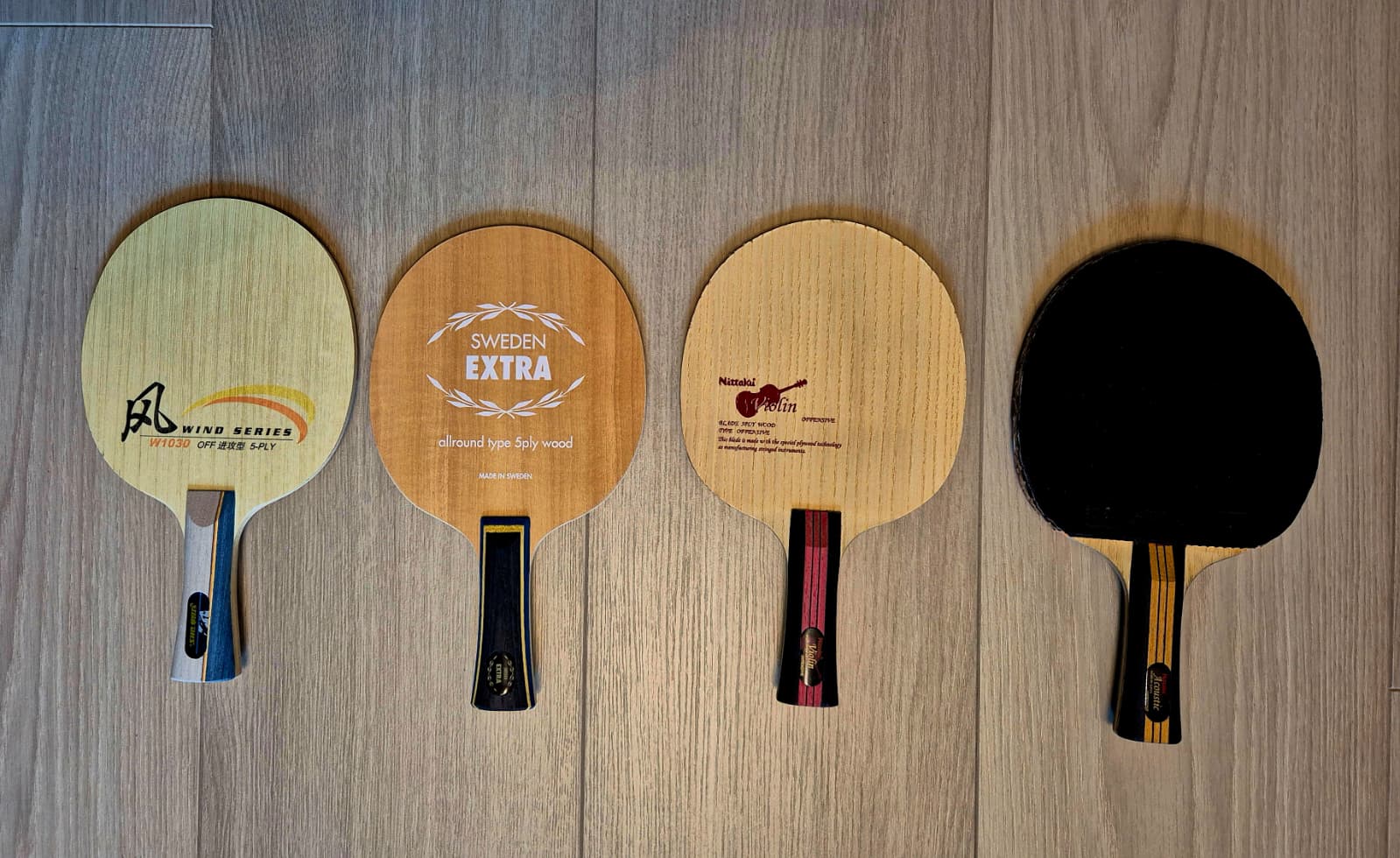
Upgrading your beginner's custom blade: A guide to help you choose your first intermediate (ALL+, OFF-) table tennis blade
Introduction
In one of my previous posts, I discussed how fast equipment can stall your technique as a beginner and why you should avoid the "Fast Food" trap of table tennis: buying fast equipment that feels good now but ruins your technique later.
Buying a "carbon cannon" gives you an initial rush of speed, but for a beginner without a coach or intense training, it becomes a problem. To keep the ball on the table, you are forced to "brake" your swing to compensate for the equipment's high raw power. This traps you in a shy, "brush-only" stroke and prevents you from ever developing the explosive "hit-brush" contact that the pros actually use to generate true power. Now, if you followed my advice, you hopefully started with a classic 5-ply all-wood all round blade and control-oriented rubbers like 729 FX / Super Soft or Xiom Vega Intro.
But table tennis is a journey of progression and perhaps your initial setup is not giving you enough speed and spin. If this is the case, I hope you checked one of my other articles and upgraded your rubbers first while keeping the same blade. If you haven't please check this before reading the rest of this blogpost.
But okay, let's assume that you upgraded your rubbers already and still get the feeling that is not enough because your technique has improved a lot since then. Well this is excellent news, I'm really happy for you and it means that you and I are going to have a fun chat about upgrading your blade to a better one!
But before we get started, let's talk about some key technicalities that are relevant when discussing blades, because understanding this will help you when choosing yours.
Woods, Thickness/Weight & Handles
Wood Types
In my beginner's blades blogpost I briefly discussed the topic of the different wood types and why to choose certain types and avoid others when you first get started. I mentioned that the most common and balanced setups are usually made of Limba and Ayous, and that many of the modern pro blades have this core combination as well. I wanted to keep your options limited back then because you were a beginner, but now it is the time to open up the possibilities and discuss some of the other great combinations and how they affect your setup and playstyle overall.
There are a couple other famous wood types like Walnut, Anigre and White Ash that will also be present in some of the blades I will recommend here and in other posts, but I will talk about those in future articles.
Thickness/Weight
Ok so that was a lot of wood talk. Wood is very important because it has a great impact on how the blade feels and behaves, but is it the only variable to consider when upgrading your table tennis blade? No, blade thickness and weight are also very important, so let's briefly talk about those.
Generally speaking, the thicker the blade, the stiffer and faster it will be, it's like hitting with a napkin or a wooden plank, you get the point. Most offensive blades fall between 5.5mm and 6.5mm, with a thinner blade allowing for more flex, which increases dwell time and helps generate more spin, so this is very good for looping with a good amount of control. On the other side, a thicker blade has a bigger rebound so more energy from the incoming ball is preserved. This is helpful for hitting, blocking, and power looping but you need to have better technique/accuracy as control is lower.
When it comes to weight, this is largely preference based, as some people prefer the one thing and others the other. I know players who state the exact weight to their vendors, just to make sure that their new blade plays the same as their previous ones, and there is nothing wrong with that. Others care less about some grams and focus more on the wood and playing properties.
In any case, the average weight for a shakehand blade is around 80g to 90g and while 10g might not sound like much of a difference, you can really feel that, especially with heavier or lighter rubbers.
As a rule of thumb, heavier blades have more momentum, so strokes result in a more powerful shot. The downside is that it can be a bit much on the wrist and also slow down your transitions from forehand to backhand. Lighter blades on the other side, allow for quicker strokes and more wrist feeling/flexibility but have less power generally. Choose the right setup according to your playstyle!
Handles
Last but not least, one of the most overlooked topics when choosing a new blade and for me one of the most important for amateurs, the handle!
I'll tell you a small personal story here so you understand why this is so important: When I started playing, I made the big mistake of buying a Viscaria. It was way too fast obviously, but it also had quite the bulky handle so I developed some weird grip habits due to that. Months later, I changed to the Stiga all round classic and the handle was not perfect but much better for me, so I started feeling more comfortable with a proper grip. In the last few years, I changed to DHS blades and used a Long 3 for quite a while, but I always had the feeling that the handle was great for my backhand and not comfortable for my forehand. This is weird because it was Ma Long's blade and we all know of his forehand skills. A while after that I tried the Fang Bo B2X of a colleague, and I loved the handle instantly since day 1. It was much thinner and ergonomic for my small hands (I'm a small guy). Nowadays, I play with the DHS PG7 as my main blade and also have a DHS Wang Chuqin as my fun blade, and I love the handles so much. They are well known for having handles that disappear in your hand, and many players really dislike the feeling, but for me they are perfect.
In summary, always try the handle if possible, straight and flared and ergonomic are all very different and in the end I believe it is a matter of taste and preference. For me though, flared works better as I can have a deeper hold on the racket :)
All right, now that we have all the technicalities clear, let's finally talk about blades! Since there is a lot to cover here, I have categorised them in 3 groups to make things a bit easier and more compact for you:
Let's get going!
My Top 10 ALL+/OFF- Table Tennis Blades
I really like all the blades that I'm going to mention here, so after trying to rank them by how much I like them (and failing miserably at trying so), I have decided to rank them loosely by my subjective speed rating. I felt this was more objective than any other method I have and since I love them all and couldn't really choose, well, that was that :D
Before we start, an important disclaimer: Most of the things that I'm going to mention are not 'the' truth, but 'my' truth. Weight, thickness and wood composition aside, all other factors are somewhat subjective and full of little nuances, so if you have a different opinion that it's fine, it is possible that you have had a different experience and that is all right! I always say that diversity is one of the most beautiful things about this sport. Cool, now on to the blades!
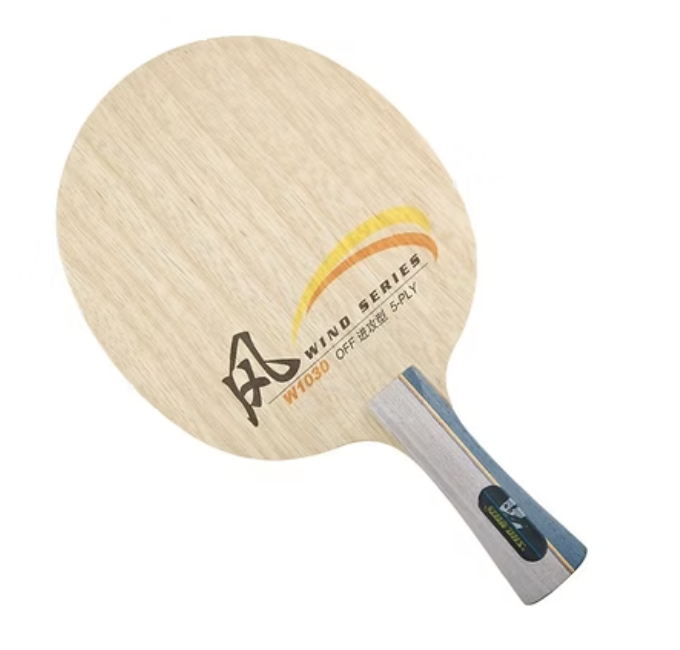
1. DHS Wind 1030 (ALL+ ish)
The Wind 1030 is probably not a blade you expected to see first on this list, I get it, neither would I until I tested it! But I have added it into the list because I thought that having at least one budget option in here. Since I couldn't test (yet, it's coming) any cheap blades from Yinhe, Loki, Sanwei or 729, I thought having the wind in here (3010 didn't make it, I tested it too, but too slow for this list, more of an ALL blade for junior players) would be appreciated for those players that don't want to spend too much and still get a pretty good deal.
Okay so, I tested this with H3N provincial orange sponge and the 8-80 on BH, and before I even put the rubbers on, it surprised me that the feeling was quite nice in the hand. The quality of the wood wasn't bad at all for being a 10 euro blade, I needed to seal the blade with the DHS sealer, but all good. The racket head/handle was clearly bigger in the smaller 3010 brother. Weight was about 87g on mine and thickness approx 6.2mm.
When testing it on the table, there was quite a lot of dwell time and feeling, also the throw angle was balanced, higher than my PG7. Control was amazing and even though speed is not the main thing of this blade (it's the slowest of all the blades mentioned here), it was plenty when I was close to the table, for sure for a beginner/low intermediate. Far from the table the blade didn't really work. The sweet spot was less than with other blades, likely due to the cheap wood.
Btw, speaking of the wood and its composition, DHS does not publish this but I have asked them personally via my contact, let's see. I have to say that for a blade that costs less than 10 euros, I was really surprised about the control and feeling of the blade and will start recommending this as a budget friendly option to those who enjoy the DHS feeling and the characteristic thin and small handle of the brand. Hopefully I can add the Loki K5 and K6 soon to this list, I'll be testing those soon.
DHS
Wind 1030
2. Donic Waldner Exclusive AR+ (ALL+ ish)
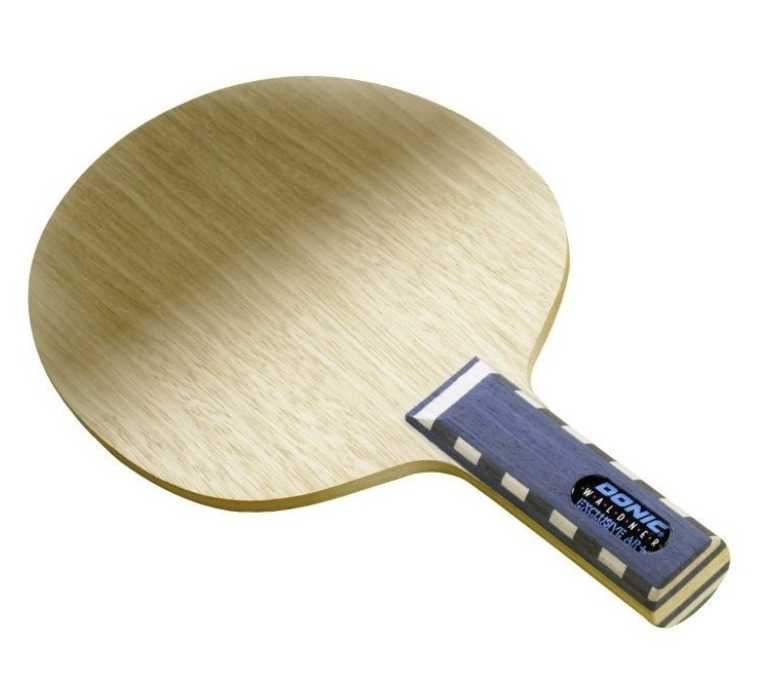
The Walner AR+ has a special place in my heart because many amateurs at the club use it, so I have tested plenty of times and it doesn't matter what rubbers it has on it (usually tensors like Razka 7, Rozena, Glayzer, Vega Europe, etc), it always feels very nice in my hand. It has an average weight of 85 grams, an average thickness of 5.7mm and it's made of an Ayous core with 2 layers of Limba next to it.
When it comes to how hard/stiff it feels in the hand, I'd say it is on the softer side of things with a very pleasant vibration to it, not as much as the Violin or the Yasaka Sweden Extra, but definitely nice. Throw angle is medium-high so plenty of net clearance when developing technique and improving. Regarding speed, it's not a very fast blade but it has enough power close to the table and bit behind that, far from the table it has the same issues as the DHS 1030 but less pronounced. This is because it is faster than the 1030, but just like it, I feel like it could perfectly fit in the ALL category, it's just a notch faster than some of my favourite beginner blades.
For the low intermediate level looking for control and feeling over speed (and a low-medium budget), this is an excellent option to keep on developing your game.
Donic
Waldner Exclusive AR+
3. Butterfly Primorac (ALL+)
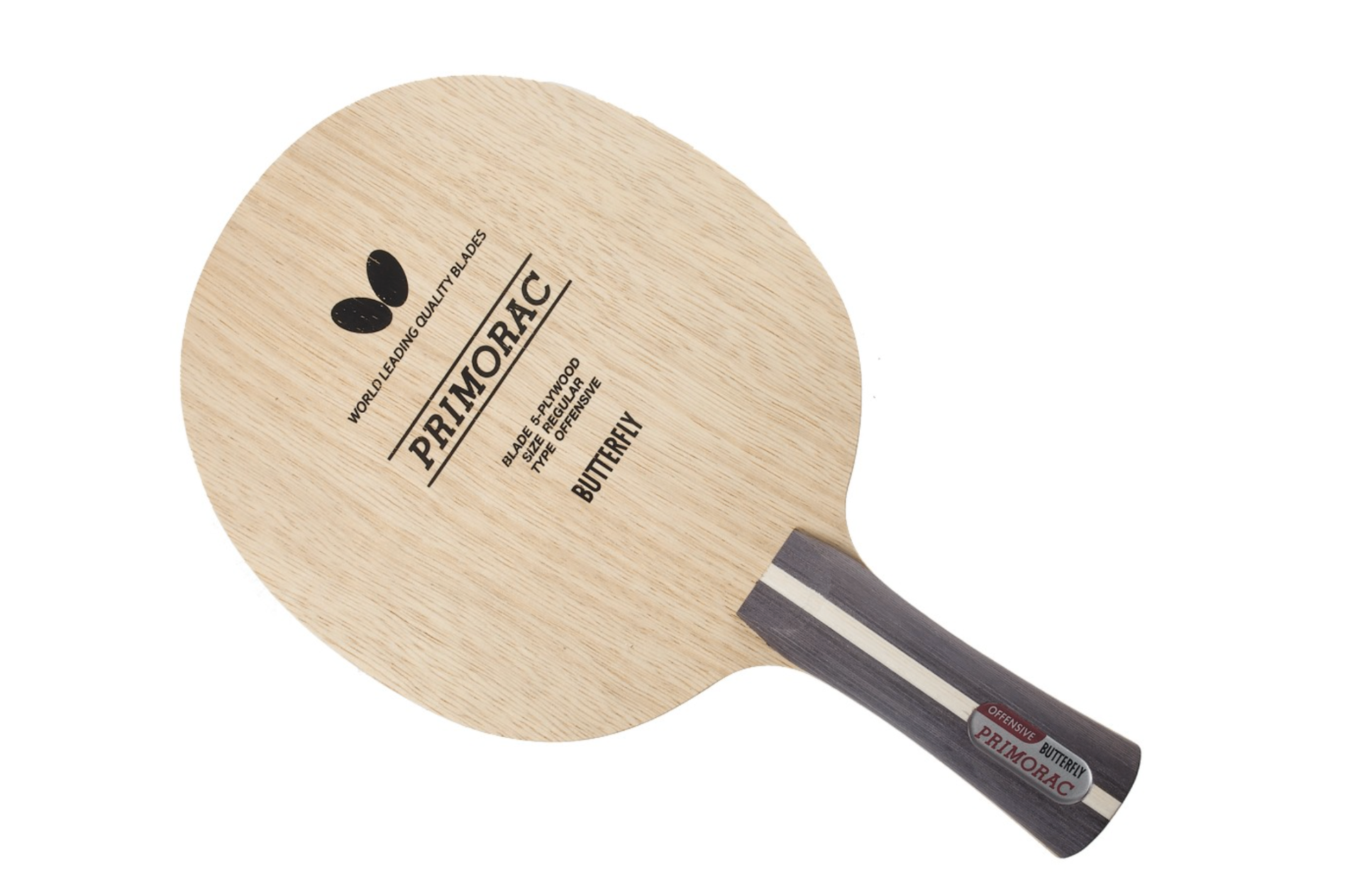
The Primorac is one of the most classic and successful blades from Butterfly (top 10 most sold wood blades according to Butterfly), and it has been around me for a long time because one of my usual training friends, Daan, played with it before, so we got to know his blade pretty well together. On top of that, it's also a very popular blade amongst beginners in the country (kind of like the Waldner and Sweden Extra), so I get to try it quite often. It weighs on average 88g, has an average thickness of about 5.5mm, and it's made of the classic 5 ply Limba and Ayous composition. Butterfly says that it is an OFF-, but in my opinion I think it fits better in the ALL+ category, while Korbel is more for the OFF- bucket.
Dwell time is good, especially compared to koto (or harder) outer blades. Throw angle is medium I'd say, just fine. When it comes to how hard/stiff it feels in the hand, I'd say it is somewhere in the middle towards the soft side of things. It's not as soft and flexy as other Limba/Ayous blades (like the DHS ones), but it's also not crisp and solid like the Samsonov blade. There is good feedback in the hand so it's enough to feel what's going on, but it's never too much vibration.
What I enjoy the most about this blade is its linearity: if you want more, you need to improve your technique so that's why it's one of my favourite blades to recommend to developing players, especially if they like the Butterfly feeling.
Butterfly
Primorac
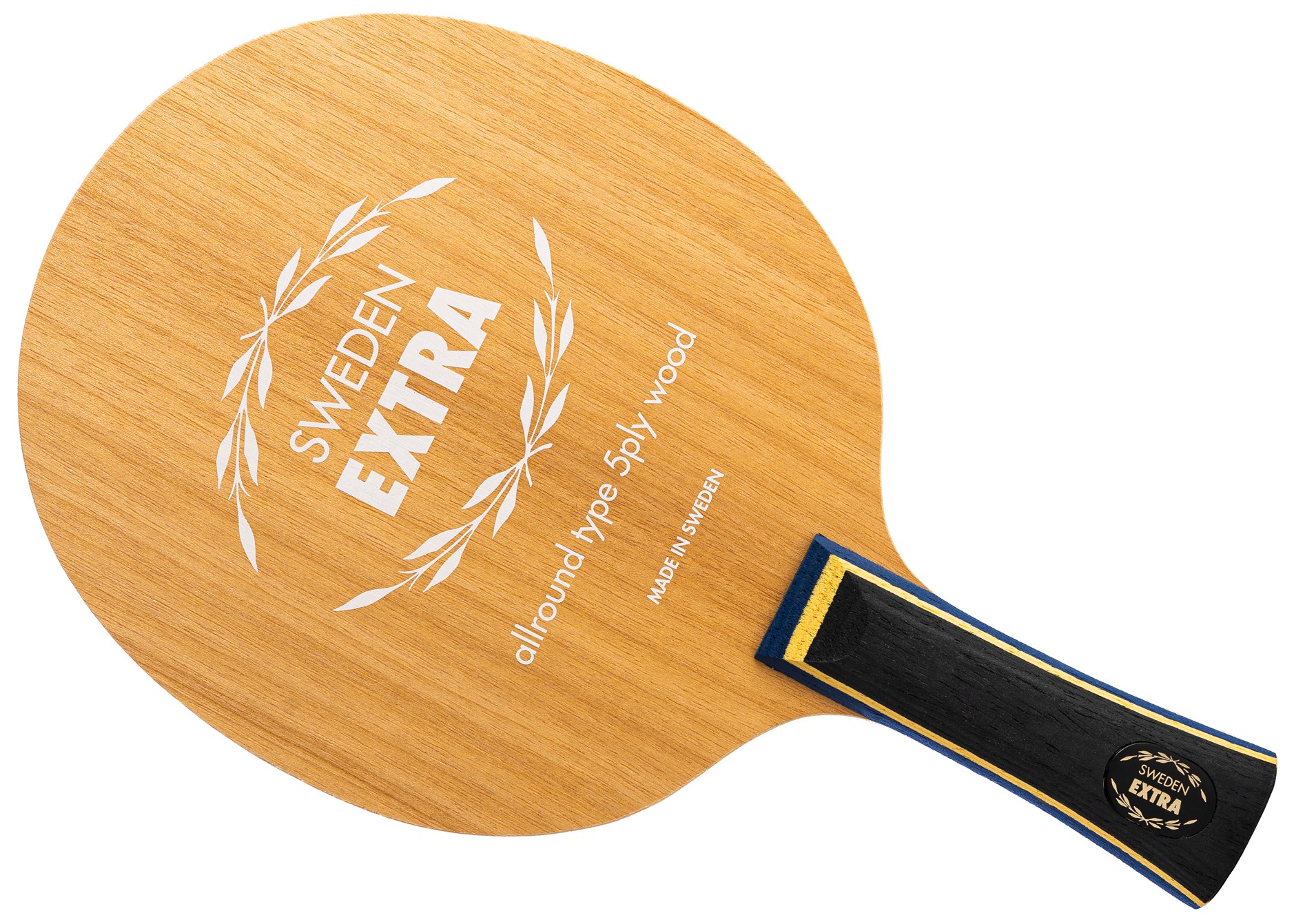
4. Yasaka Sweden Extra (ALL+)
The YSE is yet another total classic you get to see around a lot at most clubs, and you will see many people recommend it on Reddit for developing players. Like the other top10 blade here, I've had this one in hand many times because a lot of people use it (and I own one as well). Also his bigger brother the Ma Lin Extra Offensive, which my friend Nick also has. About the specs, it's 5 plies made of Ayous and the not so usual Anigre as the top. It weighs around 85g and is around 5.7 mm thick. Yasaka says it's an ALL+ blade, and I agree with that.
It's also a very linear blade, so as before, you get what you put in. I have a clear preference for blades like this. Anigre is harder than Limba but the blade doesn't feel hard or crispy, I'd say it feels softer than the Primorac, but a tiny bit harder than the Waldner. It can also just be the rubbers on it, the differences here are small. I do think it vibrates more than the Waldner and the Primorac here (and I like that) but similarly to the Violin (a bit less perhaps). Dwell time is very good and the throw angle feels medium, which makes loops very nice.
Overall it's one of my favorite ALL+ blades to recommend: it has good control, it's forgiving, but it still has the power when you need it. The handle is quite nice for those who like a bit bigger and more 'standard' handles, and feels very similar to the Sweden Classic one. Because it is so popular and many people ask me, I will make an in-depth review of it with Razka Z FH (I like a hard and tacky FH) and Razka 7 BH very soon.
Yasaka
Sweden Extra
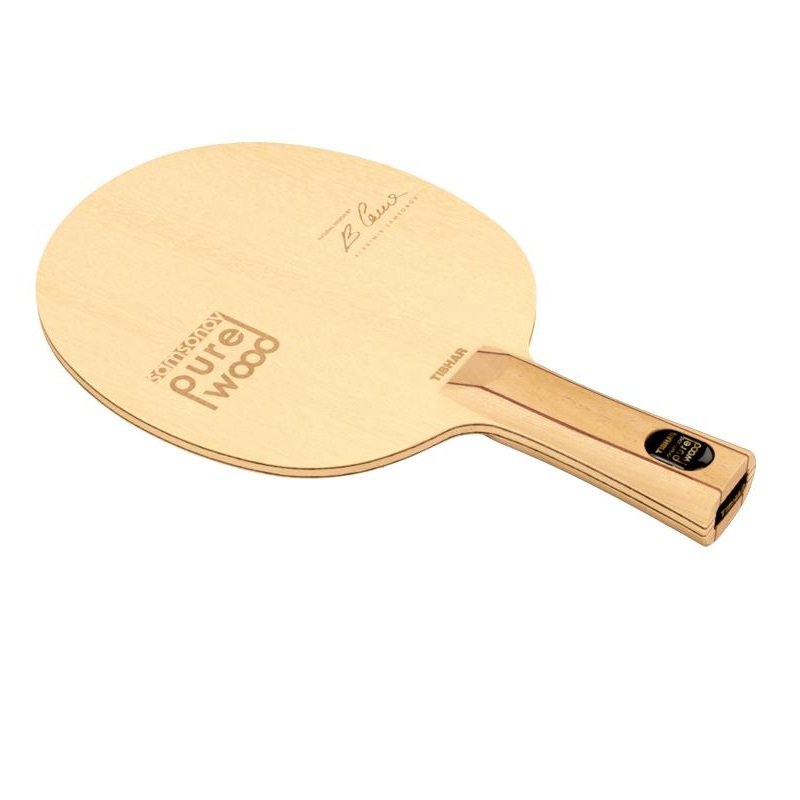
5. Tibhar Samsonov Pure Wood (ALL+)
One of my favourite people at the club, Raoul (u/superouli on Reddit), has played with this blade already for a long time with Fastarc G-1 max on both sides, and since he trains with me and we both enjoy the world of technique and gear, I often attack/block with his own blade so we can go over technical concepts together. It weights on average around 86g, has an average thickness of around 6.0mm, and it's made of (according to Stervinou.net and MyTableTennis.net who asked Tibhar themselves) Koto, Mahogany and Ayous/Samba.
I think this explains the feeling I always have with his blade, crisp and solid, not too many vibrations like your usual softer Limba/Ayous blade (or the Violin), dwell time is relatively lower than with other blades. Speed is similar to the Butterfly Primorac but a tad faster for me, it gets closer to the Violin, but will of course depend on the rubbers, however it is very linear (like the Primorac) and that's why I enjoy it the most overall. The handle is on the larger side of things so that will be nice for taller/bigger people, for me it is a bit too much but remember I'm used to very thin ones.
Tibhar
Samsonov Pure Wood
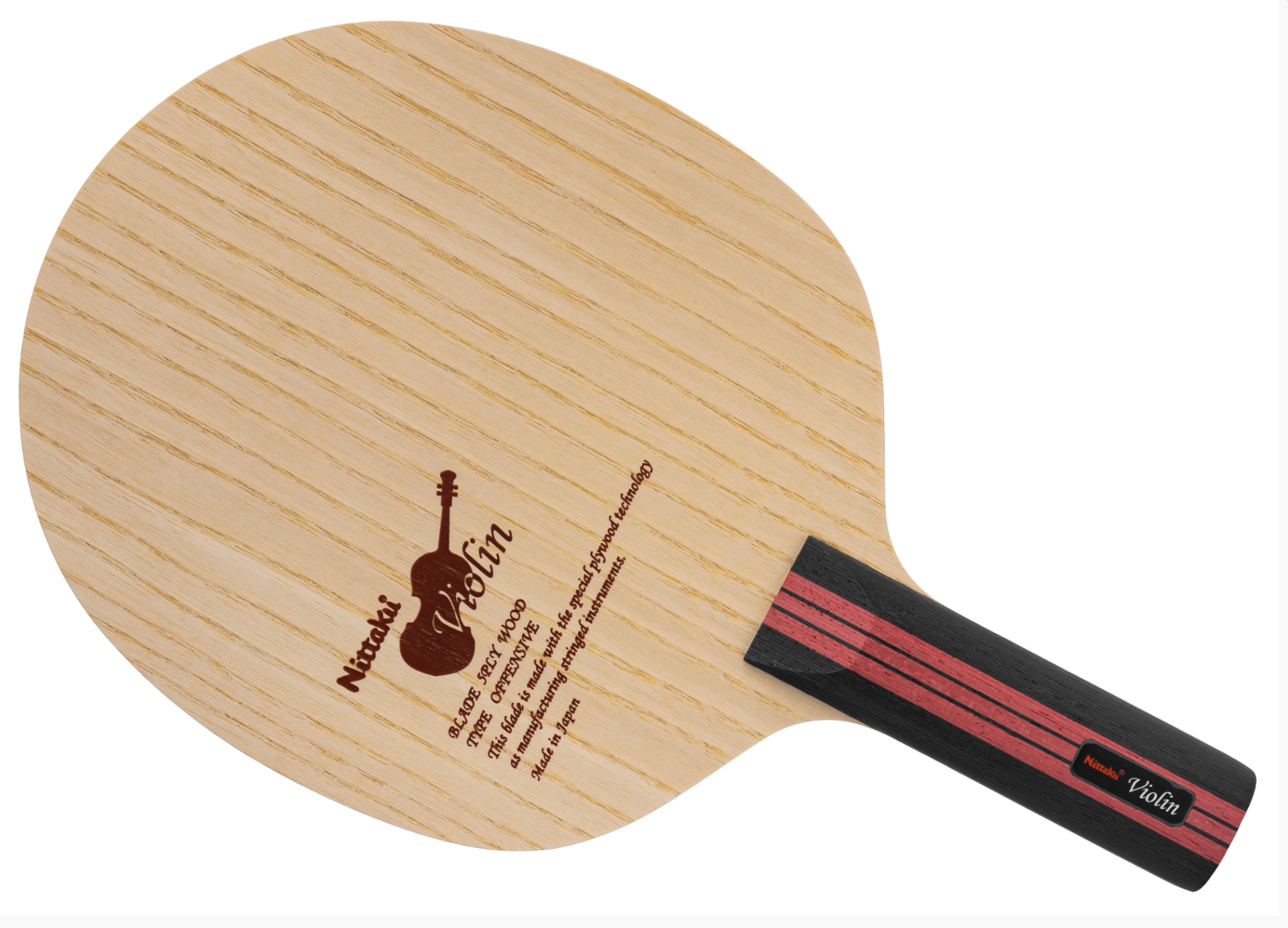
6. Nittaku Violin (ALL+/OFF- ish)
The Violin is my favourite blade from this list and it always has a special place in my heart! I have used it for a long time and nowadays even if it's a bit chipped, it still looks beautiful. However, I don't use it anymore because I have discovered that I have a clear preference for DHS handles (can't explain it, it just fits my hand and grip better). Feeling wise, it's my favourite all time, used with tacky or tensor rubbers, it always works great, it has this special touch to it, that I just can't get with anything else (likely due to the wood composition and glueing process), and that is why people love it too.
For the specs, it is about 88 grams, very thin with a thickness of around 5.3m and 5 plies of Kiri core and White Ash outer. Even though White Ash is a very hard wood, the plies are so thin that the blade still feels very soft and flexible in the hand, likely due to the Kiri core and being that thin. It vibrates a lot, the most of all blades on this list in my opinion but once you get used to it, you may as well love it (like me).
Speed wise, it's an ALL+ but it has enough kick close and mid close to the table for all the shots you need at intermediate level. Even far from the table, which is its main disadvantage, it's still fine most of the time, you just need to swing a bit harder. The blade is also very linear and doesn't have much tempo on its own, but once you add the tempo it reacts just like you expect it to, it's definitely very precise, and you get to feel it.
Nittaku
Violin
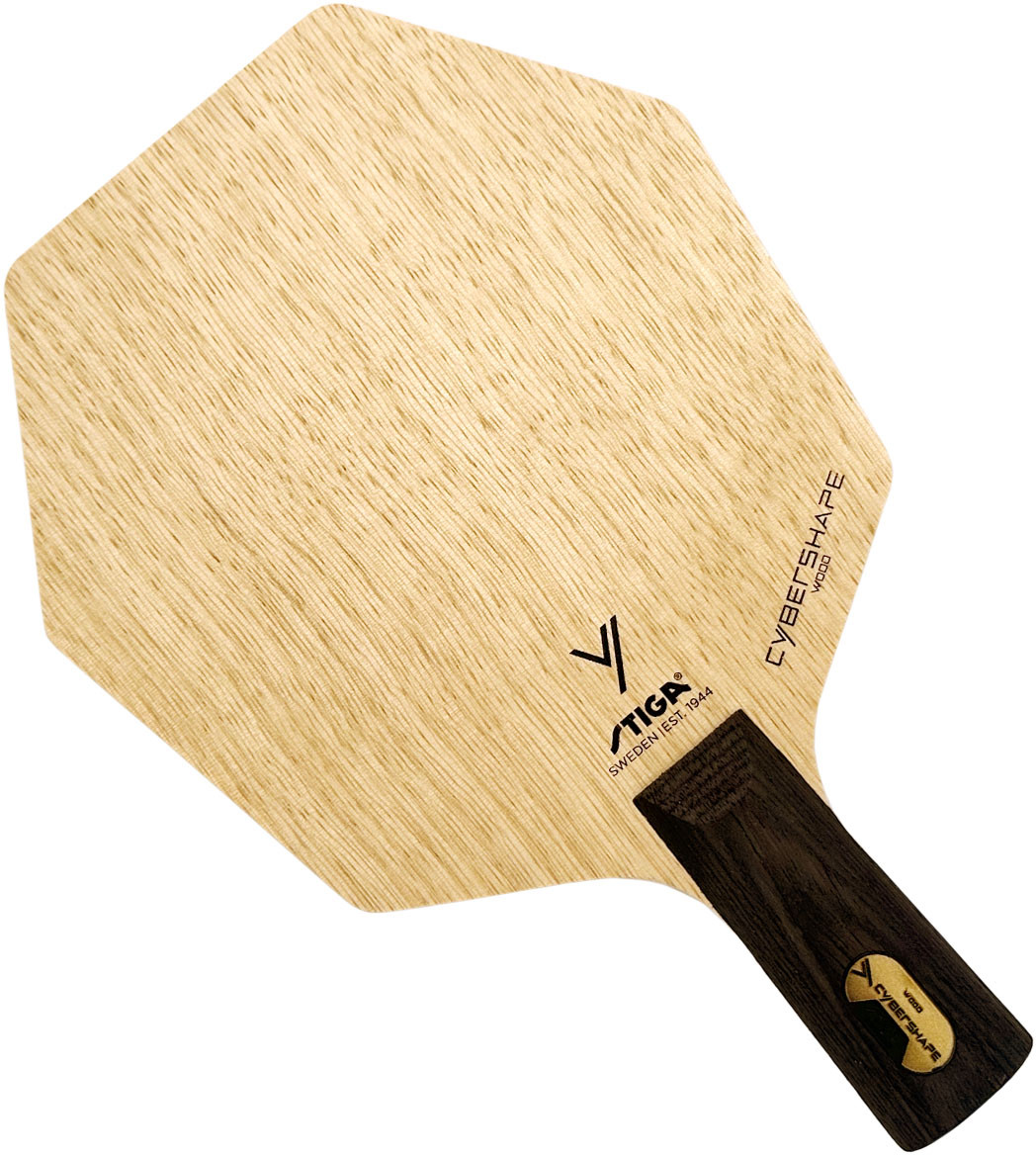
7. Stiga Cybershape Wood (OFF-)
The Cybershape Wood is the 'odd modern classic' all-wood blade because of the shape it has. One of our better regional players (Ernesto) has it as well as the carbon version, and we train often together, so I have tried it (and glued rubbers for him) many times. All of my tests were with his own rubbers, Tenergy 05/05FX and Stiga Dragongrip. Spec wise, it's a 5 ply all-wood blade made of a Limba outer with a Kiri core, it weighs on average around 88g and has a thickness of about 6.0mm. STIGA markets it as OFF-, and I think that's fair, but I'd say it sits right on the border between a strong ALL+ and a controlled OFF-. It's clearly faster and more direct than something like the Waldner or Sweden Extra, but it's not a rocket at all.
Dwell time is good, especially for an OFF- blade, thanks to the Limba outer which gives it that slightly softer touch compared to Koto outer blades. The throw angle feels medium to me, loops feel good and you still have enough power when you step back. When it comes to how hard/stiff it feels in the hand, I'd say it sits somewhere in the middle but leaning towards the harder side. It's not as soft and flexy as the Waldner or Sweden Extra, but it's also not super crisp and rigid like harder outer ply blades due to the Kiri core. Vibration is there, but it's Dwell time is good, especially for an OFF- blade, thanks to the Limba outer which gives it that slightly softer touch compared to Koto outer blades. The throw angle feels medium to me, loops feel good and you still have enough power when you step back. When it comes to how hard/stiff it feels in the hand, I'd say it sits somewhere in the middle but leaning towards the harder side. It's not as soft and flexy as the Waldner or Sweden Extra, but it's also not super crisp and rigid like harder outer ply blades due to the Kiri core. Vibration is there, but it's more controlled than the Sweden Extra.
Lastly, it's a linear blade but with a bit more punch compared to classic ALL+ blades. For players who like the Stiga feel but want something faster than the all round classic and its iterations (plus don't mind the shape) I think it's a very good option in the controlled OFF- category. but with a bit more punch compared to classic ALL+ blades. For players who like the Stiga feel but want something faster than the all round classic and its iterations (plus don't mind the shape) I think it's a very good option in the controlled OFF- category.
Stiga
Cybershape Wood
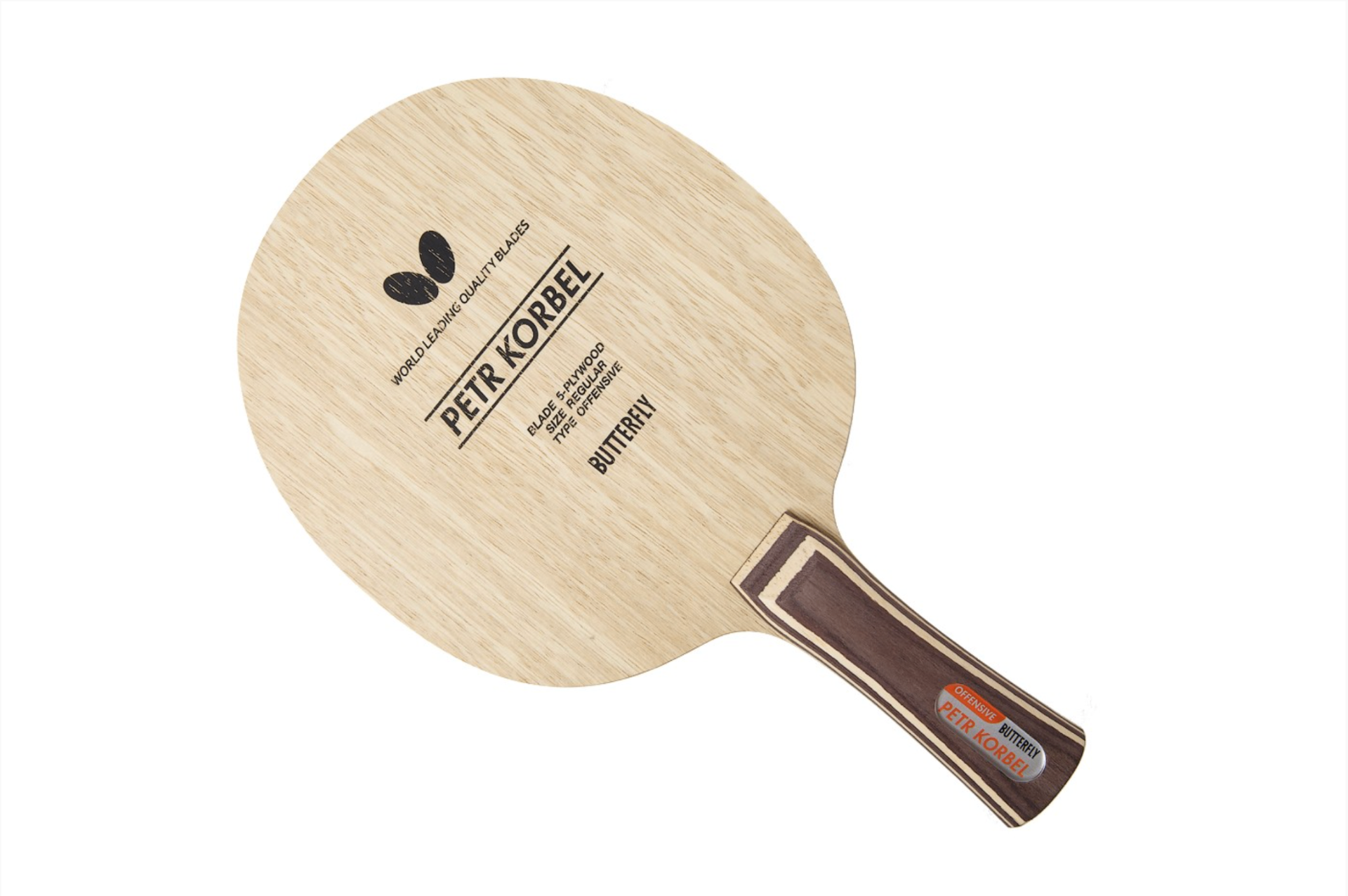
8. Butterfly Petr Korbel (OFF-)
Another absolute classic, and one that many people love and recommend as a second (sometimes also first) blade. It is one of Butterfly's most successful ever blades, and you will meet many people in all clubs with it, just like in ours. I've never tested this with any hard tacky rubbers, only tensors, so please remember that, it does affect the feeling significantly. About the specs, it's the classical 5 ply Limba + Ayous combination, weighs on average around 89g, and has a thickness of about 5.9 mm. Compared to its little brother, the Primorac (5.5 mm), it's slightly thicker and you can notice it.
Butterfly says it's an OFF blade, but in my mind it's more of an OFF- nowadays. It's not super fast, but it has more power than a Sweden Extra or Violin for example. Regarding the feeling, it's medium and balanced but towards the harder side of things, so it's noticeably more solid and crispy than the Primorac, while still keeping the Limba/Ayous feel. Due to that, it has a nice dwell time for loops but it's still stable on blocks/counterdrives, and the throw angle feels somewhat medium-high. About vibration, it is there, but it is controlled. You feel it less than a Violin, Sweden Extra and Primorac for example.
I'd say that what I enjoy most about the Korbel is that it is linear but with a kick, especially when compared to the ALL+ classics. You get what you put in, but when you accelerate properly, it gives you proper offensive speed. It's one of those blades that can easily take you from developing player to the higher regional levels without ever feeling like you need more to grow.
Butterfly
Petr Korbel
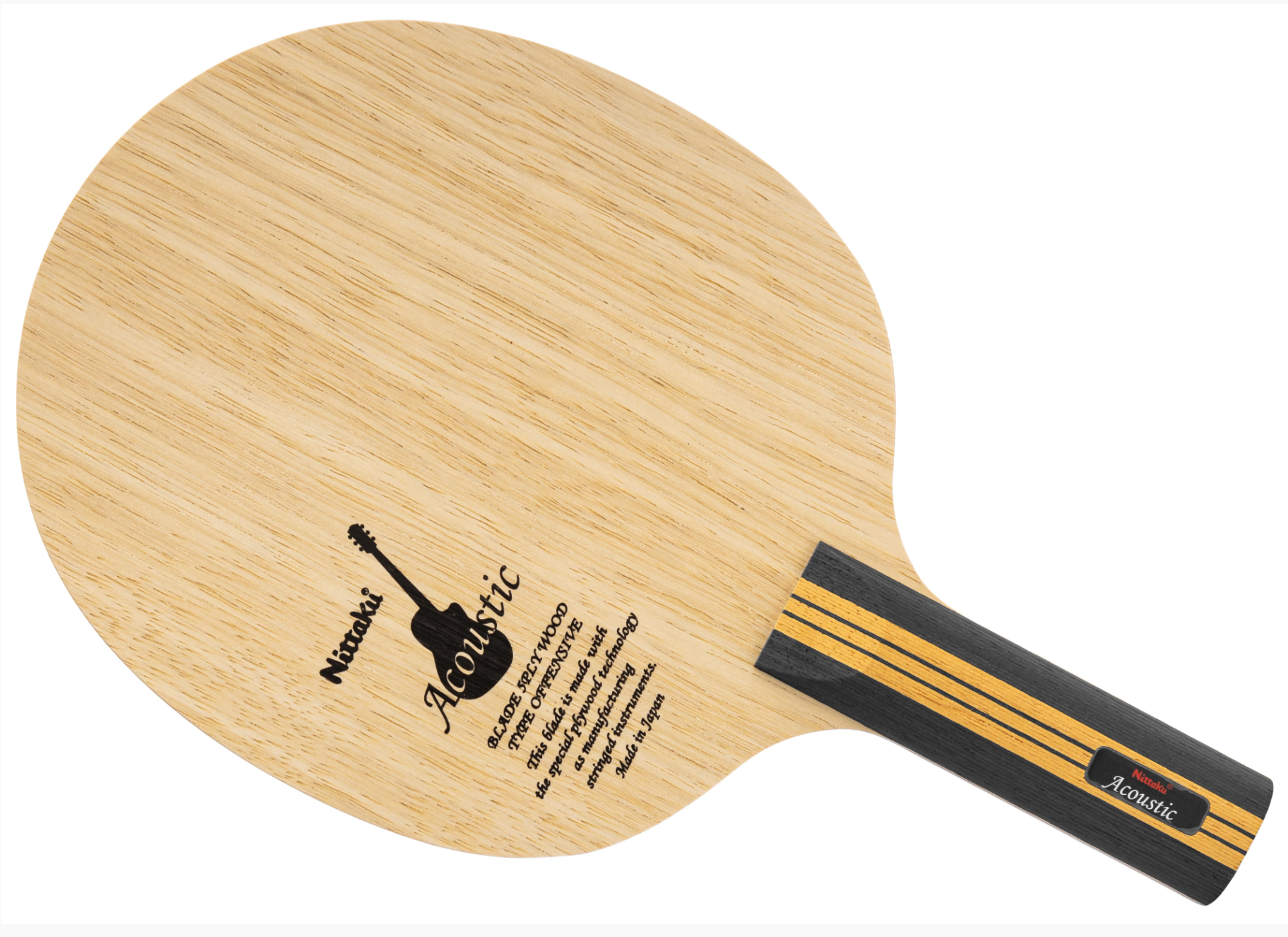
9. Nittaku Acoustic (OFF-)
The Acoustic is the bigger brother of the Violin and makes my personal top 3 of this whole list of blades. I have had 3 in the last years, and have played with it many matches, always with chinese rubbers on the FH and chinese or hybrids on the backhand, once with a tensor on BH (I think it was Rakza 7). To compare it with the Violin is simple, the Violin is soft, flexible, has a lot of vibration and it's very controlled and loopy, lots of dwell time and a big throw angle. The Acoustic is the same, but with more punch, so it is faster, harder and has a bit less dwell and throw angle. What it loses in control, you get in power, but the fantastic vibration and that specific 'music instrument' feeling is still there for both blades.
For the specs, it is made of Limba and Tung, yes Tung, not Kiri as people say although this does cause confusion sometimes. It is about 5.7mm thick, weighs around 88g and comes in a fantastic finish from the factory, just like the Violin. Nittaku says it's an OFF blade, I'd say is more OFF-, but nevertheless, for a low intermediate player, more than enough! In fact, I'd recommend a violin first, then later on when you have grown your technique, change to Acoustic.
I'd say that the Acoustic is probably one the best compromises between speed (close and far from the table) and feeling/control that there is for 5 ply OFF- blades. Not everybody will agree to this, especially if you prefer a Koto outer blade, but since I'm a Limba/Ayous guy, this is my top pick for that.
Nittaku
Acoustic
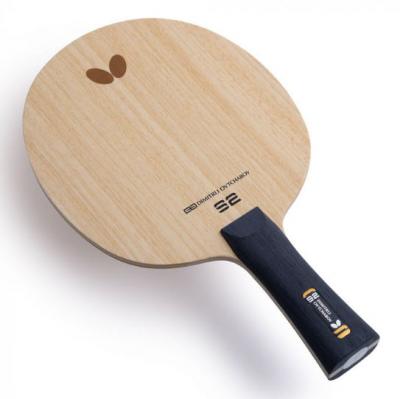
10. Butterfly Ovtcharov S2 (OFF- / OFF)
Last but not least, the Ovtcharov S2, probably not the name you expected to see here, maybe you would have put Hadraw or Falcima when it comes to Butterfly blades. And you would not be wrong, they are similar in speed (Hadraw a tiny bit slower, Falcima a bit faster), but the thing is, I have not tried those yet, so I'll stick to the Ovtcharov S2! This is the fastest blade of my list, and it gets into the category of OFF blades easily if you put good power on it. It was the blade of one of our best young talents for a while, Rico, and I used to play with him a lot before (and try his blade), until he became too good (nowadays I have no chance as he moves towards the national divisions).
The blade is fast and feels solid and crispy, I'm not sure what 5 plies of wood Butterfly uses, I cannot find it anywhere, but my gut feeling says it is not Limba/Ayous, I get the feeling it is something like Koto. Nevertheless, it is 6.0mm thick, weighs around 90-95g and you can feel the speed when you play with it.
The reason why I chose it for the final item of the list is because even though it is fast, it still has a decent feeling (more muted than the violin for sure) and a lot of precision and control, it did not feel to me like one of those bouncy blades where you can never really predict what you will get when you hit the ball. So I would recommend this blade to people that like a solid feeling and are wondering if they should go to a 7 ply blade like Clipper, Fextra 7, PG7, Korbel SK7, etc. Before you go there, give this a go if you like controlled 5 ply blades. If my friend could use it all the way to the highest regional level, why wouldn't you?!
Butterfly
Ovtcharov S2
Blades That I Tried But Didn't Make the Top 10
Other Community-Recommended Blades That I Have Not Tried (Yet)
The world of table tennis blades is huge, and I of course haven't tested many of the other great blades out there. This is why I asked the Table Tennis Daily community for help, and I got the following list of fantastic blades that would fit in the ALL+/OFF- category. I hope I can test them all one day and make some reviews about them. Here is the complete list ordered alphabetically (not by speed), please let me know your feedback on those if you know more!
That was all for this long post! I hope you enjoyed it and that it will help you with your present and future blade choices. And remember that if you need any personalised advice, you can always get in touch. See you at the table!
Need personalized equipment advice?
I can help you find the perfect blade and rubber setup for your playing style.